blog menu

Close X

Blog Categories

Start here

Solar Makes Cents: How Rooftop Solar Can Save Canadian Families Money

read the post >

Clean Tech Investment Tax Credit: Your Shortcut to Lower Bills & Higher Profits

read the post >

Next post >

Energy Economics >

Reduce electricity bills, increase property value, and achieve strong financial returns while guarding against rising utility rates.

Emerging Energy Tech & Innovation >

Emerging Energy Tech >

Explore the latest in energy technology, smart energy management, AI optimization, and next-generation innovations.

Energy Market Insights >

Learn about macro-level industry trends, policy shifts, and energy market dynamics.

Energy Sovereignty & Independence >

Energy Sovereignty >

Reduce reliance on external and foreign energy, achieve energy stability, and gain control over your energy future. 

Close X

Blog Categories

Start here

Electrical lineworkers in high-visibility safety gear installing a steel lattice high-voltage transmission tower using a crane in a rugged Canadian mountain landscape under overcast skies.

Solar Makes Cents: How Rooftop Solar Can Save Canadian Families Money

read the post >

Electrical lineworkers in high-visibility safety gear installing a steel lattice high-voltage transmission tower using a crane in a rugged Canadian mountain landscape under overcast skies.

Clean Tech Investment Tax Credit: Your Shortcut to Lower Bills & Higher Profits

read the post >

< Prev Post

Clean Tech Investment Tax Credit: Your Shortcut to Lower Bills & Higher Profits

read the post >

Energy Economics >

Reduce electricity bills, increase property value, and achieve strong financial returns while guarding against rising utility rates.

Emerging Energy Tech & Innovation >

Emerging Energy Tech >

Explore the latest in energy technology, smart energy management, AI optimization, and next-generation innovations.

Energy Market Insights >

Learn about macro-level industry trends, policy shifts, and energy market dynamics.

Energy Sovereignty & Independence >

Energy Sovereignty >

Reduce reliance on external and foreign energy, achieve energy stability, and gain control over your energy future. 

Powering Canada Strong: What It Will Actually Take

May 27, 2026

blog menu

Close X

Blog Categories

Start here

Next post >

Solar Makes Cents: How Rooftop Solar Can Save Canadian Families Money

read the post >

Clean Tech Investment Tax Credit: Your Shortcut to Lower Bills & Higher Profits

read the post >

Energy Economics >

Reduce electricity bills, increase property value, and achieve strong financial returns while guarding against rising utility rates.

Emerging Energy Tech & Innovation >

Emerging Energy Tech >

Explore the latest in energy technology, smart energy management, AI optimization, and next-generation innovations.

Energy Market Insights >

Learn about macro-level industry trends, policy shifts, and energy market dynamics.

Energy Sovereignty & Independence >

Energy Sovereignty >

Reduce reliance on external and foreign energy, achieve energy stability, and gain control over your energy future. 

Close X

Blog Categories

Start here

< Prev Post

Electrical lineworkers in high-visibility safety gear installing a steel lattice high-voltage transmission tower using a crane in a rugged Canadian mountain landscape under overcast skies.

Solar Makes Cents: How Rooftop Solar Can Save Canadian Families Money

read the post >

Electrical lineworkers in high-visibility safety gear installing a steel lattice high-voltage transmission tower using a crane in a rugged Canadian mountain landscape under overcast skies.

Clean Tech Investment Tax Credit: Your Shortcut to Lower Bills & Higher Profits

read the post >

Clean Tech Investment Tax Credit: Your Shortcut to Lower Bills & Higher Profits

read the post >

Energy Economics >

Reduce electricity bills, increase property value, and achieve strong financial returns while guarding against rising utility rates.

Emerging Energy Tech & Innovation >

Emerging Energy Tech >

Explore the latest in energy technology, smart energy management, AI optimization, and next-generation innovations.

Energy Market Insights >

Learn about macro-level industry trends, policy shifts, and energy market dynamics.

Energy Sovereignty & Independence >

Energy Sovereignty >

Reduce reliance on external and foreign energy, achieve energy stability, and gain control over your energy future. 

At GreenKey, our mission is to help Canadian families, businesses, and municipalities spend less money on electricity, so we can dedicate our resources to the things that really matter. We make sure you get the best deal on energy by providing unbiased expert analysis and professional project consulting for residential, commercial, and utility-scale projects.

Do less. Save more. Spend money on life, not electricity.

Own your energy. Grow your green.

GreenKey Homes for families & homeowners

GreenKey Consulting for developers

GreenKey Consulting for Businesses

GreenKey Consulting for Communities

Last year, the federal government called its electricity plan the Clean Electricity Strategy. In May 2026, it returned as Powering Canada Strong: A National Strategy for an Electrified Canadian Economy.

That name change tells the real story.

For nearly two decades, Canada has focused on making our relatively flat electricity system cleaner. We succeeded. At present, 82% of Canada’s electricity comes from non-emitting sources.

But while we succeeded in decarbonising our grid, we did not grow the reach of electricity across the broader economy. Today, electricity still accounts for only about one-fifth of Canada’s final energy consumption. The remaining four-fifths continues to come from burning fuels directly.

The new strategy marks a fundamental shift in objective: from greening a largely static grid to actively expanding it and electrifying large parts of the economy that still run on combustion. This is not a minor adjustment in emphasis. It is a fundamentally different undertaking that requires Canada to rebuild industrial and infrastructure capabilities we have not exercised at this scale in more than half a century.

As someone who has spent over twenty years developing and operating major energy infrastructure projects around the world, I believe the vision in Powering Canada Strong is broadly correct. The reframe from “clean electricity” to “electrified economy” is overdue and directionally right.

However, a compelling strategy on paper and a built system in the real world are separated by a very wide gap. Having spent my career inside that gap, this piece examines what it will actually take to cross it.

Powering Canada Strong is a discussion paper, not a final plan. The government released it alongside a broad consultation process. What follows is not a comprehensive critique of the document itself, but a focus on the hard practical questions that will determine whether the ambition becomes reality.

A clean but flat grid

Between 2010 and 2023, Canada’s total electricity generation rose from 581 to 620 terawatt-hours, which is a modest 6.6% increase over thirteen years. Essentially flat. Over that same window, the system got dramatically cleaner. Wind generation grew 364%, solar increased more than fortyfold, and electricity-related emissions fell 63% between 2000 and 2022. As NRCan notes, the back half of the twentieth century saw generation climb more than tenfold, but that major build-out era ended around 2000. For the past two decades, the volume has barely moved while the cleanliness improved significantly.

So while we have managed to decarbonise a flat system, which is a major accomplishment, what we haven’t done is grow the share of the economy that runs on electricity at all. According to the Canada Energy Regulator, electricity accounted for about 18% of Canada’s final energy consumption in 2020. The International Energy Agency puts the figure closer to 23% in 2023. Either way, electricity still represents only about one-fifth of total final energy use in Canada, while the remaining four-fifths continues to come from the direct combustion of fuels.

That is the laggard. Not the cleanliness of our electrons, but rather the reach of them. The provinces and utilities who built the clean grid did not fail; they optimised for the variable the moment called for. The moment has changed. And the question the new federal strategy is really asking is whether we can do the thing we stopped doing around the millennium: grow the system, and this time grow it into the parts of the economy still running on combustion.

Stress-Testing the Trillion-Dollar Double

I have argued before, in writing about the electron gap, that supply is becoming the binding constraint on this economy, and that the lead times on building it mean we have to start now. Powering Canada Strong is, in effect, Ottawa’s answer to exactly that problem.

I approach the strategy’s central target as a broadly supportive voice. That said, even strong supporters should stress-test the numbers.

The strategy’s headline is to double the grid by 2050, at a cost of more than a trillion dollars. Before aligning plans and capital around a number like that, it deserves scrutiny — better now than after we’ve stranded the investment.

The Canada Energy Regulator projects electricity demand growth of 26% to 85% by 2050. That’s not a forecast; it’s a spread. More than three to one, from the country’s own official forecaster. And the drivers behind it (GDP, LNG exports, oil and gas prices, and now data centres) are deeply uncertain. Data centres alone range from 1.5 to 12 GW of new demand.

To put those numbers in context, twelve gigawatts is roughly Alberta’s entire peak load today. Read plainly, this doesn’t say “demand will double.” It says the range of plausible outcomes is so wide that precision is an illusion.

A potential pending downturn

History counsels humility, especially in a moment like this. We are living in uncertain times, with a real downside risk of a global slowdown or recession. After the 2008 financial crisis, electricity demand across the developed world didn’t dip and rebound; it structurally broke.

In the United States, electricity sales grew just 0.6% per year from 2009 to 2019, while GDP grew 2.3%, ending decades of steady 1–2% annual growth. Europe and Japan saw the same decoupling. Utilities that had planned billions in new capacity on the assumption of continuous growth were forced to shelve, or strand, those investments.

But these real-world outcomes should be taken with a grain of salt. Much of that flattening came from one-time gains, not permanent trends. As unbelievable as this might sound, lighting alone was a major driver: the shift to LEDs reduced energy use by roughly 80%. That fact matters, because you only get to replace the country’s lightbulbs once. Industrial offshoring was the other major factor, and it, too, has largely run its course.

Projecting that flatline forward implicitly assumes a second efficiency windfall of similar magnitude. There is no obvious candidate waiting.

A different kind of shock

The next downturn may not look like the last. The post-2009 economic slowdown happened in an economy where most transportation (cars and trucks) and building heating still ran on gasoline and natural gas, rather than electricity. That meant an economic shock could only reduce electricity demand, as there was no ability to increase it by shifting load onto the grid. Today, we are electrifying exactly those sectors. In today’s world, a price shock can just as easily pull new load onto the grid, as households and fleets move away from volatile fuels toward the capital-cost stability of electricity. The dynamic that flattened demand last time could amplify it next time.

To be clear, this is a well-reasoned hypothesis, not a measured fact. We haven’t yet had a recession deep into the electrification era to test it. But it highlights the asymmetry that we are no longer operating in a system where downside risk only points one way.

Which is why my own view is that we should overbuild, regardless of where the cycle turns. Two things hold through the noise. First, we are entering a paradigm that adds structurally new load, rather than simply cycling existing demand. Second, over the 30–40 year operating life of assets like solar and wind (the time horizon that actually matters) demand trends upward across multiple business cycles.

As odd as it may seem, London’s Victorian sewers offer a strong analogy. Chief engineer Joseph Bazalgette deliberately doubled the diameter of the main sewers, giving the system roughly four times the planned capacity. He built for a future city that didn’t yet exist, and London benefited for more than a century. The lesson isn’t blind scale. It’s to overbuild the right kind of capacity: modular, incrementable, and redeployable assets (solar, storage, distributed resources) that can be added in tranches, rather than monolithic bets sized to a single forecast peak that may never arrive.

Electrification and energy efficiency

There is one more reason why overbuilding makes more sense than it may first appear, and it resolves an apparent contradiction in the strategy itself. How can we need twice as much electricity while also being told that efficiency is the answer? Because electrification shrinks the total system.

Across the developed world, we convert only about a third of primary energy into useful work. The Lawrence Livermore National Laboratory’s energy-flow accounting puts the rejected share at roughly two-thirds, most of it lost as waste heat from combustion.

Electric systems change that math. An electric motor is roughly 90% efficient, while an internal combustion engine loses the majority of its energy to heat. Move the same service (kilometres driven, buildings heated, industrial processes) onto electricity, and the useful output requires far less primary energy.

So the grid can double even as the total energy system shrinks and becomes cheaper to run. That is the mechanism behind the claim that electrification lowers emissions at the lowest system cost. This isn’t a slogan; it’s thermodynamics.

What “scale” really means today

When most people hear “double the grid,” they picture more power lines. An operator hears something far more complex.

Scale today is no longer just generation and wires. It includes storage, distributed energy resources, micro- and mini-grids, vehicle-to-grid systems, behind-the-meter batteries that allow homes and fleets to store and return power, demand-side management, and the software and AI layers that coordinate it all in real time. The grid of 2050 is different from today’s system. It’s distributed, two-way, and software-defined. Planning for “twice as much power” without planning for that complexity is planning for the wrong system.

There is also a distinctly Canadian dimension that often gets overlooked: hardening. We still think of ourselves primarily as a winter-peaking system, and it’s true that heat pump adoption is pushing those peaks higher in the winter months. But the other side of the calendar is changing just as quickly. A strong El Niño is forecast to develop through late 2026, and on current projections, 2026 and especially 2027 are likely to challenge global heat records.

I spent nearly four years living in Doha, where nothing functions without air conditioning and summer power demand is staggering. That’s an extreme case, but it points in the same direction: a warming climate is adding a summer cooling peak to a system historically designed around winter heating. A grid built only for the cold is a grid built for the wrong century.

Weatherization and resilience aren’t add-ons to scale — they are what make scale possible.

Financing the build: sound tools, fragile confidence

The financial architecture is the most concrete part of the strategy, and it carries forward almost directly from Budget 2025. It includes tens of billions in investment tax credits, a $10 billion increase in the Canada Infrastructure Bank’s envelope (to $45 billion, with at least $20 billion for clean energy), a doubling of the Indigenous Loan Guarantee Program to $10 billion, the $4.5 billion Smart Renewables and Electrification Pathways program, a new $25 billion Canada Strong Fund to seed the country’s first sovereign wealth fund, and an extension of the Clean Electricity Investment Tax Credit to major interprovincial transmission projects.

These financing tools build on the foundation laid in the budget. But here is the operator’s truth about capital: it does not fear cost nearly as much as it fears whiplash. A project that pencils at a given return can absorb a higher cost of capital. What it cannot absorb is a financing or policy regime that changes direction mid-build. When provinces (British Columbia, Alberta, and Ontario among them) have paused or reversed course on energy policy, the real damage was rarely the pause itself. It was the chilling signal to investors that the rules might move again. That signal takes years to thaw.

The strategy’s own language about a “predictable and durable” regulatory landscape is exactly right. Durability is the part to hold the government to. Money does not come back the moment a policy is reversed; it waits to be convinced the reversals are over.

From provincial islands to a connected grid

One of the strategy’s sharpest insights is that Canada does not really have a single national grid. Instead, it has a collection of provincial grids that are largely segregated, planned independently, and governed in isolation. These systems trade far more readily north-south with the United States than east-west with one another.

The case for deeper integration is not theoretical. The Nordic countries’ shared market, Nord Pool, allows them to pool hydro, wind, and thermal resources across borders. This smooths prices and shares reserves, so one country’s shortfall becomes another’s surplus.

The counter-example is equally instructive: Texas, whose grid remained deliberately isolated from its neighbours. During the 2021 winter storm, the state discovered the hard way that an electrical island cannot import help when its entire fleet (gas, wind, and all) falters at once. The lesson is not about any particular fuel; it is about the real cost of isolation when extreme weather hits.

Canada’s provincial “islands” represent a milder version of the same vulnerability. Stitching them together is one of the highest-value, least-glamorous moves in the entire strategy.

(Exactly how we do it — using conventional alternating current (AC) lines or dedicated high-voltage direct current (HVDC) corridors of the kind being built in Europe and the American West — is a rich technical and economic question that deserves its own dedicated piece. Stay tuned for a future article.)

Can we actually build it?

This is where my own scars are, so let me be direct about the three constraints that will decide whether the trillion dollars becomes infrastructure or stays a press release.

First, supply chains. A doubled grid needs transformers, switchgear, cables, semiconductors, and the digital control systems to run them. The strategy itself notes that domestic production of these components fell from 58% to 52% between 2018 and 2023. This means that we are more import-dependent now than five years ago, at exactly the moment every major economy is trying to build at once. Lazard’s latest cost analysis shows the consequence already: the cost of a new gas turbine has hit a ten-year high, driven by shortages and multi-year delivery queues. You cannot finance your way around a transformer that takes three years to arrive. Building domestic and allied manufacturing capacity is not industrial nostalgia; it is the critical path. On the gas turbines specifically, the strategy is right to keep natural gas in the mix — it is dispatchable, it complements intermittent renewables, and Canadian gas is among the lowest-emitting in the world. The honest question is not whether gas has a role but how long and how large that role should be. It is a bridge whose length we should set deliberately, rather than a destination we drift toward.

Second, and in my view the most important gap, is interconnection. The strategy’s action items are thin on queue reform, and yet the queue is where projects go to die. In Alberta, requests to connect large new loads reached nearly 11,900 MW in 2025 (almost the entire province’s peak demand) against which the system operator could offer an interim connection limit of just 1,200 MW, roughly a tenth, with the rest pushed to 2028 and beyond. I wrote about this dynamic at length before: we are not short of people who want to build. We are short of a system that can model, assess, and approve new connections fast enough to let them. A strategy to double the grid that does not fix the on-ramp to the grid has skipped a step.

Third, people. The Powering Canada Strong strategy projects the electricity sector will need 28,000 new workers by 2028 and faces up to 130,000 job openings by 2050. And it surfaces the most telling number in the whole document: more than 80% of electricity employers already name finding skilled talent as their single most pressing constraint over the next five years — ahead of inflation, regulation, and interest rates. Sit with that. The binding constraint on doubling the grid is not capital, and it is not even permitting. It is people who can build. Anyone who has run a large project knows skilled labour is a real schedule risk, not a line-item afterthought. And here is where I want to be especially clear, because it matters: the workforce best positioned to deliver this is the one we already have. The project-management discipline, the large-capital execution, the complex-construction muscle that built this country’s oil and gas industry into a global force is exactly the capability a national electricity build-out demands. These are not people to be transitioned away from; they are the people who will pour the concrete and string the lines. Honouring that expertise, and pointing it at the next build, is both the right thing and the smart thing.

The First Nations opportunity

The strategy doubles the Indigenous Loan Guarantee Program to $10 billion and proposes a Crown Consultation Hub to coordinate one consultation process per community, per project. In the North, where remote communities pay rates many times the national average and still run on diesel, the case is both economic and moral.

But the real opportunity is not consultation; it’s ownership. And it is already being proven. The Tilley Solar Project, about 200 kilometres southeast of Calgary, came online at the end of 2025. It’s a 23.6 MW Indigenous-led solar farm in which the Alexander First Nation holds a controlling equity stake alongside FNpower, built with Concord Green Energy and financed through the Canada Infrastructure Bank, Indigenous Services Canada, and the SREP program. Three of the exact instruments this strategy leans on, already working together on a real, operating asset. Its leadership has framed the controlling stake as ending years of frustration at watching development happen to their community rather than with it. That is the model: First Nations as equity owners and beneficiaries of long-term revenue, not stakeholders to be consulted and moved past. Done correctly, it is reconciliation and sound development at the same time.

What it will take

This document is an invitation, not a verdict. The government has named its action areas and asked the country’s provinces, utilities, Indigenous partners, industry, and labour to weigh in. If you work in this sector, that is worth taking literally; the input window is open, and the people who fill it will shape what gets built.

Here is my honest summary, after twenty years inside builds like this one. The vision is sound. The reframe at the heart of it (electrify the economy, don’t just keep polishing an already-clean grid) is the right call, and it is overdue. What is unproven is delivery. And delivery is the hard part, because it always is. The physics of this is manageable. The economics increasingly favour us. The integration of supply chains, grid queues, trades, interties, and the durability of the policy that underwrites it all is where this is won or lost.

We are already closer to 2050 than we are to the year 2000. It will feel distant right up until it isn’t.

The shade of the trees we enjoy today was planted by people who knew they would never sit under them. We owe the next generation the same foresight: a grid, and an economy, built to carry them forward.

It is going to be hard. But we can do it, if we commit everything we have.
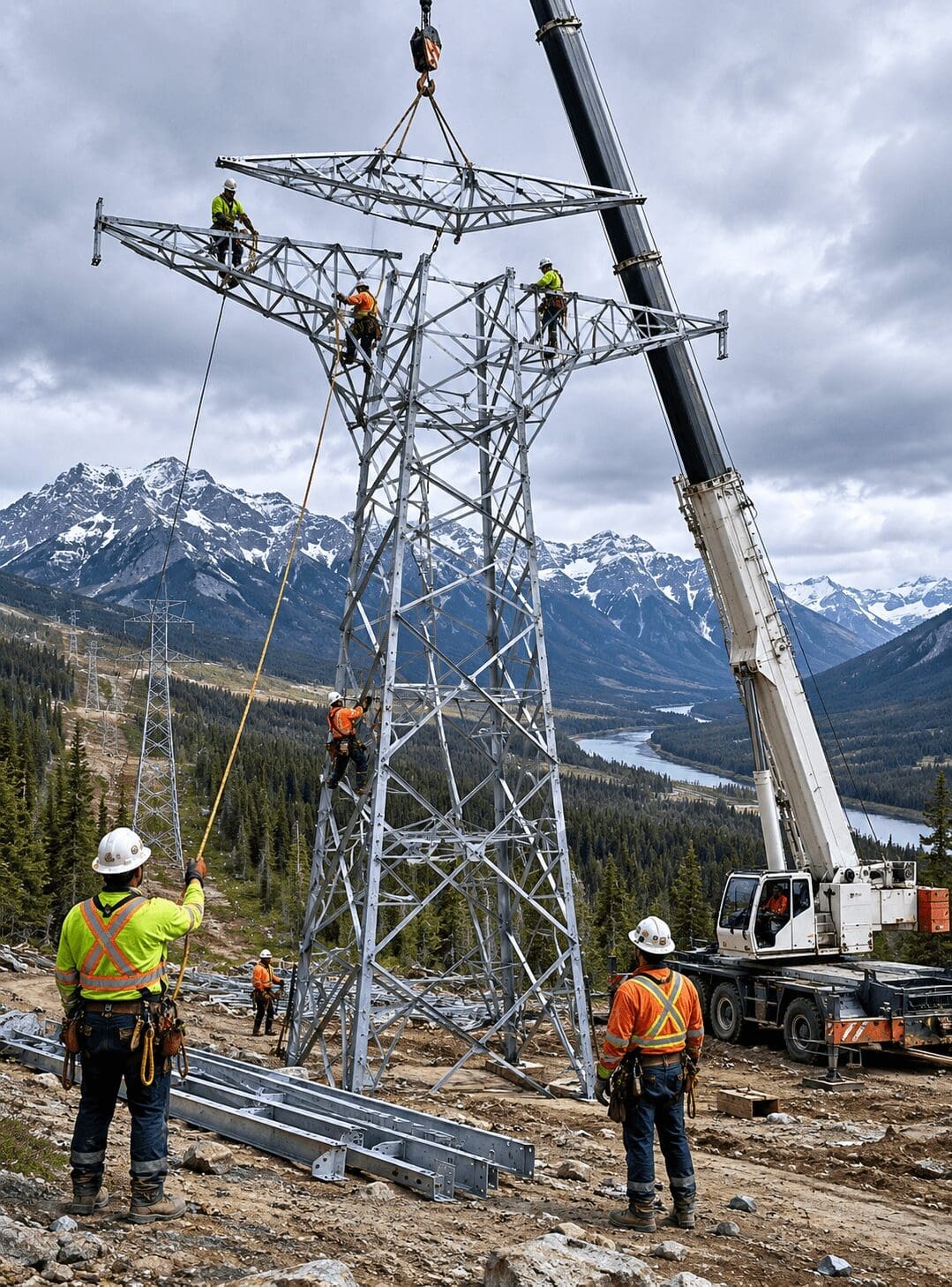
Electrical lineworkers in high-visibility safety gear installing a steel lattice high-voltage transmission tower using a crane in a rugged Canadian mountain landscape under overcast skies.

Based in Calgary, Alberta and Proudly Canadian • Don’t Get Burned When You Get Solar • Based in Calgary, Alberta and Proudly Canadian • Don’t Get Burned When You Get Solar • Based in Calgary, Alberta and Proudly Canadian • Don’t Get Burned When You Get Solar • Based in Calgary, Alberta and Proudly Canadian • Don’t Get Burned When You Get Solar • Based in Calgary, Alberta and Proudly Canadian • Don’t Get Burned When You Get Solar • Based in Calgary, Alberta and Proudly Canadian • Don’t Get Burned When You Get Solar • Based in Calgary, Alberta and Proudly Canadian • Don’t Get Burned When You Get Solar • Based in Calgary, Alberta and Proudly Canadian • Don’t Get Burned When You Get Solar • Based in Calgary, Alberta and Proudly Canadian • Don’t Get Burned When You Get Solar • Based in Calgary, Alberta and Proudly Canadian • Don’t Get Burned When You Get Solar • Based in Calgary, Alberta and Proudly Canadian • Don’t Get Burned When You Get Solar • Based in Calgary, Alberta and Proudly Canadian • Don’t Get Burned When You Get Solar •    

Based in Calgary, Alberta and Proudly Canadian • Don’t Get Burned When You Get Solar • Based in Calgary, Alberta and Proudly Canadian • Don’t Get Burned When You Get Solar • Based in Calgary, Alberta and Proudly Canadian • Don’t Get Burned When You Get Solar • Based in Calgary, Alberta and Proudly Canadian • Don’t Get Burned When You Get Solar • Based in Calgary, Alberta and Proudly Canadian • Don’t Get Burned When You Get Solar • Based in Calgary, Alberta and Proudly Canadian • Don’t Get Burned When You Get Solar • Based in Calgary, Alberta and Proudly Canadian • Don’t Get Burned When You Get Solar • Based in Calgary, Alberta and Proudly Canadian • Don’t Get Burned When You Get Solar • Based in Calgary, Alberta and Proudly Canadian • Don’t Get Burned When You Get Solar • Based in Calgary, Alberta and Proudly Canadian • Don’t Get Burned When You Get Solar • Based in Calgary, Alberta and Proudly Canadian • Don’t Get Burned When You Get Solar • Based in Calgary, Alberta and Proudly Canadian • Don’t Get Burned When You Get Solar •    

Based in Calgary, Alberta and Proudly Canadian • Don’t Get Burned When You Get Solar • Based in Calgary, Alberta and Proudly Canadian • Don’t Get Burned When You Get Solar • Based in Calgary, Alberta and Proudly Canadian • Don’t Get Burned When You Get Solar • Based in Calgary, Alberta and Proudly Canadian • Don’t Get Burned When You Get Solar • Based in Calgary, Alberta and Proudly Canadian • Don’t Get Burned When You Get Solar • Based in Calgary, Alberta and Proudly Canadian • Don’t Get Burned When You Get Solar • Based in Calgary, Alberta and Proudly Canadian • Don’t Get Burned When You Get Solar • Based in Calgary, Alberta and Proudly Canadian • Don’t Get Burned When You Get Solar • Based in Calgary, Alberta and Proudly Canadian • Don’t Get Burned When You Get Solar • Based in Calgary, Alberta and Proudly Canadian • Don’t Get Burned When You Get Solar • Based in Calgary, Alberta and Proudly Canadian • Don’t Get Burned When You Get Solar • Based in Calgary, Alberta and Proudly Canadian • Don’t Get Burned When You Get Solar •    

Based in Calgary, Alberta and Proudly Canadian • Don’t Get Burned When You Get Solar • Based in Calgary, Alberta and Proudly Canadian • Don’t Get Burned When You Get Solar • Based in Calgary, Alberta and Proudly Canadian • Don’t Get Burned When You Get Solar • Based in Calgary, Alberta and Proudly Canadian • Don’t Get Burned When You Get Solar • Based in Calgary, Alberta and Proudly Canadian • Don’t Get Burned When You Get Solar • Based in Calgary, Alberta and Proudly Canadian • Don’t Get Burned When You Get Solar • Based in Calgary, Alberta and Proudly Canadian • Don’t Get Burned When You Get Solar • Based in Calgary, Alberta and Proudly Canadian • Don’t Get Burned When You Get Solar • Based in Calgary, Alberta and Proudly Canadian • Don’t Get Burned When You Get Solar • Based in Calgary, Alberta and Proudly Canadian • Don’t Get Burned When You Get Solar • Based in Calgary, Alberta and Proudly Canadian • Don’t Get Burned When You Get Solar • Based in Calgary, Alberta and Proudly Canadian • Don’t Get Burned When You Get Solar •    

Based in Calgary, Alberta and Proudly Canadian • Don’t Get Burned When You Get Solar • Based in Calgary, Alberta and Proudly Canadian • Don’t Get Burned When You Get Solar • Based in Calgary, Alberta and Proudly Canadian • Don’t Get Burned When You Get Solar • Based in Calgary, Alberta and Proudly Canadian • Don’t Get Burned When You Get Solar • Based in Calgary, Alberta and Proudly Canadian • Don’t Get Burned When You Get Solar • Based in Calgary, Alberta and Proudly Canadian • Don’t Get Burned When You Get Solar • Based in Calgary, Alberta and Proudly Canadian • Don’t Get Burned When You Get Solar • Based in Calgary, Alberta and Proudly Canadian • Don’t Get Burned When You Get Solar • Based in Calgary, Alberta and Proudly Canadian • Don’t Get Burned When You Get Solar • Based in Calgary, Alberta and Proudly Canadian • Don’t Get Burned When You Get Solar • Based in Calgary, Alberta and Proudly Canadian • Don’t Get Burned When You Get Solar • Based in Calgary, Alberta and Proudly Canadian • Don’t Get Burned When You Get Solar •    

Based in Calgary, Alberta and Proudly Canadian • Don’t Get Burned When You Get Solar • Based in Calgary, Alberta and Proudly Canadian • Don’t Get Burned When You Get Solar • Based in Calgary, Alberta and Proudly Canadian • Don’t Get Burned When You Get Solar • Based in Calgary, Alberta and Proudly Canadian • Don’t Get Burned When You Get Solar • Based in Calgary, Alberta and Proudly Canadian • Don’t Get Burned When You Get Solar • Based in Calgary, Alberta and Proudly Canadian • Don’t Get Burned When You Get Solar • Based in Calgary, Alberta and Proudly Canadian • Don’t Get Burned When You Get Solar • Based in Calgary, Alberta and Proudly Canadian • Don’t Get Burned When You Get Solar • Based in Calgary, Alberta and Proudly Canadian • Don’t Get Burned When You Get Solar • Based in Calgary, Alberta and Proudly Canadian • Don’t Get Burned When You Get Solar • Based in Calgary, Alberta and Proudly Canadian • Don’t Get Burned When You Get Solar • Based in Calgary, Alberta and Proudly Canadian • Don’t Get Burned When You Get Solar •    

Based in Calgary, Alberta and Proudly Canadian • Don’t Get Burned When You Get Solar • Based in Calgary, Alberta and Proudly Canadian • Don’t Get Burned When You Get Solar • Based in Calgary, Alberta and Proudly Canadian • Don’t Get Burned When You Get Solar • Based in Calgary, Alberta and Proudly Canadian • Don’t Get Burned When You Get Solar • Based in Calgary, Alberta and Proudly Canadian • Don’t Get Burned When You Get Solar • Based in Calgary, Alberta and Proudly Canadian • Don’t Get Burned When You Get Solar • Based in Calgary, Alberta and Proudly Canadian • Don’t Get Burned When You Get Solar • Based in Calgary, Alberta and Proudly Canadian • Don’t Get Burned When You Get Solar • Based in Calgary, Alberta and Proudly Canadian • Don’t Get Burned When You Get Solar • Based in Calgary, Alberta and Proudly Canadian • Don’t Get Burned When You Get Solar • Based in Calgary, Alberta and Proudly Canadian • Don’t Get Burned When You Get Solar • Based in Calgary, Alberta and Proudly Canadian • Don’t Get Burned When You Get Solar •    

Based in Calgary, Alberta and Proudly Canadian • Don’t Get Burned When You Get Solar • Based in Calgary, Alberta and Proudly Canadian • Don’t Get Burned When You Get Solar • Based in Calgary, Alberta and Proudly Canadian • Don’t Get Burned When You Get Solar • Based in Calgary, Alberta and Proudly Canadian • Don’t Get Burned When You Get Solar • Based in Calgary, Alberta and Proudly Canadian • Don’t Get Burned When You Get Solar • Based in Calgary, Alberta and Proudly Canadian • Don’t Get Burned When You Get Solar • Based in Calgary, Alberta and Proudly Canadian • Don’t Get Burned When You Get Solar • Based in Calgary, Alberta and Proudly Canadian • Don’t Get Burned When You Get Solar • Based in Calgary, Alberta and Proudly Canadian • Don’t Get Burned When You Get Solar • Based in Calgary, Alberta and Proudly Canadian • Don’t Get Burned When You Get Solar • Based in Calgary, Alberta and Proudly Canadian • Don’t Get Burned When You Get Solar • Based in Calgary, Alberta and Proudly Canadian • Don’t Get Burned When You Get Solar •    

Based in Calgary, Alberta and Proudly Canadian • Don’t Get Burned When You Get Solar • Based in Calgary, Alberta and Proudly Canadian • Don’t Get Burned When You Get Solar • Based in Calgary, Alberta and Proudly Canadian • Don’t Get Burned When You Get Solar • Based in Calgary, Alberta and Proudly Canadian • Don’t Get Burned When You Get Solar • Based in Calgary, Alberta and Proudly Canadian • Don’t Get Burned When You Get Solar • Based in Calgary, Alberta and Proudly Canadian • Don’t Get Burned When You Get Solar • Based in Calgary, Alberta and Proudly Canadian • Don’t Get Burned When You Get Solar • Based in Calgary, Alberta and Proudly Canadian • Don’t Get Burned When You Get Solar • Based in Calgary, Alberta and Proudly Canadian • Don’t Get Burned When You Get Solar • Based in Calgary, Alberta and Proudly Canadian • Don’t Get Burned When You Get Solar • Based in Calgary, Alberta and Proudly Canadian • Don’t Get Burned When You Get Solar • Based in Calgary, Alberta and Proudly Canadian • Don’t Get Burned When You Get Solar •    

Based in Calgary, Alberta and Proudly Canadian • Don’t Get Burned When You Get Solar • Based in Calgary, Alberta and Proudly Canadian • Don’t Get Burned When You Get Solar • Based in Calgary, Alberta and Proudly Canadian • Don’t Get Burned When You Get Solar • Based in Calgary, Alberta and Proudly Canadian • Don’t Get Burned When You Get Solar • Based in Calgary, Alberta and Proudly Canadian • Don’t Get Burned When You Get Solar • Based in Calgary, Alberta and Proudly Canadian • Don’t Get Burned When You Get Solar • Based in Calgary, Alberta and Proudly Canadian • Don’t Get Burned When You Get Solar • Based in Calgary, Alberta and Proudly Canadian • Don’t Get Burned When You Get Solar • Based in Calgary, Alberta and Proudly Canadian • Don’t Get Burned When You Get Solar • Based in Calgary, Alberta and Proudly Canadian • Don’t Get Burned When You Get Solar • Based in Calgary, Alberta and Proudly Canadian • Don’t Get Burned When You Get Solar • Based in Calgary, Alberta and Proudly Canadian • Don’t Get Burned When You Get Solar •    

Feel secure when you switch to
solar.

When You Work with greenkey

you get:

A no-pressure analysis of your home's solar potential.

A free strategy session to help you decide if GreenKey is right for you.

A dedicated, knowledgeable Project Consultant with industry experience.

A robust current and future energy needs assessment.

Quotes from our network of trusted, licensed contractors.

An expert analysis of your quotes, using GreenKey's proprietary modeling tool.

A full side-by-side comparison chart with normalized data.

An expert recommendation based on your longterm needs and goals.

A live session with your Project Consultant to discuss financing options.

An information session to help you understand how Solar Club works.

Based in Calgary, Alberta and Proudly Canadian • Don’t Get Burned When You Get Solar • Based in Calgary, Alberta and Proudly Canadian • Don’t Get Burned When You Get Solar • Based in Calgary, Alberta and Proudly Canadian • Don’t Get Burned When You Get Solar • Based in Calgary, Alberta and Proudly Canadian • Don’t Get Burned When You Get Solar • Based in Calgary, Alberta and Proudly Canadian • Don’t Get Burned When You Get Solar • Based in Calgary, Alberta and Proudly Canadian • Don’t Get Burned When You Get Solar • Based in Calgary, Alberta and Proudly Canadian • Don’t Get Burned When You Get Solar • Based in Calgary, Alberta and Proudly Canadian • Don’t Get Burned When You Get Solar • Based in Calgary, Alberta and Proudly Canadian • Don’t Get Burned When You Get Solar • Based in Calgary, Alberta and Proudly Canadian • Don’t Get Burned When You Get Solar • Based in Calgary, Alberta and Proudly Canadian • Don’t Get Burned When You Get Solar • Based in Calgary, Alberta and Proudly Canadian • Don’t Get Burned When You Get Solar •    

Based in Calgary, Alberta and Proudly Canadian • Don’t Get Burned When You Get Solar • Based in Calgary, Alberta and Proudly Canadian • Don’t Get Burned When You Get Solar • Based in Calgary, Alberta and Proudly Canadian • Don’t Get Burned When You Get Solar • Based in Calgary, Alberta and Proudly Canadian • Don’t Get Burned When You Get Solar • Based in Calgary, Alberta and Proudly Canadian • Don’t Get Burned When You Get Solar • Based in Calgary, Alberta and Proudly Canadian • Don’t Get Burned When You Get Solar • Based in Calgary, Alberta and Proudly Canadian • Don’t Get Burned When You Get Solar • Based in Calgary, Alberta and Proudly Canadian • Don’t Get Burned When You Get Solar • Based in Calgary, Alberta and Proudly Canadian • Don’t Get Burned When You Get Solar • Based in Calgary, Alberta and Proudly Canadian • Don’t Get Burned When You Get Solar • Based in Calgary, Alberta and Proudly Canadian • Don’t Get Burned When You Get Solar • Based in Calgary, Alberta and Proudly Canadian • Don’t Get Burned When You Get Solar •    

Based in Calgary, Alberta and Proudly Canadian • Don’t Get Burned When You Get Solar • Based in Calgary, Alberta and Proudly Canadian • Don’t Get Burned When You Get Solar • Based in Calgary, Alberta and Proudly Canadian • Don’t Get Burned When You Get Solar • Based in Calgary, Alberta and Proudly Canadian • Don’t Get Burned When You Get Solar • Based in Calgary, Alberta and Proudly Canadian • Don’t Get Burned When You Get Solar • Based in Calgary, Alberta and Proudly Canadian • Don’t Get Burned When You Get Solar • Based in Calgary, Alberta and Proudly Canadian • Don’t Get Burned When You Get Solar • Based in Calgary, Alberta and Proudly Canadian • Don’t Get Burned When You Get Solar • Based in Calgary, Alberta and Proudly Canadian • Don’t Get Burned When You Get Solar • Based in Calgary, Alberta and Proudly Canadian • Don’t Get Burned When You Get Solar • Based in Calgary, Alberta and Proudly Canadian • Don’t Get Burned When You Get Solar • Based in Calgary, Alberta and Proudly Canadian • Don’t Get Burned When You Get Solar •    

Based in Calgary, Alberta and Proudly Canadian • Don’t Get Burned When You Get Solar • Based in Calgary, Alberta and Proudly Canadian • Don’t Get Burned When You Get Solar • Based in Calgary, Alberta and Proudly Canadian • Don’t Get Burned When You Get Solar • Based in Calgary, Alberta and Proudly Canadian • Don’t Get Burned When You Get Solar • Based in Calgary, Alberta and Proudly Canadian • Don’t Get Burned When You Get Solar • Based in Calgary, Alberta and Proudly Canadian • Don’t Get Burned When You Get Solar • Based in Calgary, Alberta and Proudly Canadian • Don’t Get Burned When You Get Solar • Based in Calgary, Alberta and Proudly Canadian • Don’t Get Burned When You Get Solar • Based in Calgary, Alberta and Proudly Canadian • Don’t Get Burned When You Get Solar • Based in Calgary, Alberta and Proudly Canadian • Don’t Get Burned When You Get Solar • Based in Calgary, Alberta and Proudly Canadian • Don’t Get Burned When You Get Solar • Based in Calgary, Alberta and Proudly Canadian • Don’t Get Burned When You Get Solar •    

Based in Calgary, Alberta and Proudly Canadian • Don’t Get Burned When You Get Solar • Based in Calgary, Alberta and Proudly Canadian • Don’t Get Burned When You Get Solar • Based in Calgary, Alberta and Proudly Canadian • Don’t Get Burned When You Get Solar • Based in Calgary, Alberta and Proudly Canadian • Don’t Get Burned When You Get Solar • Based in Calgary, Alberta and Proudly Canadian • Don’t Get Burned When You Get Solar • Based in Calgary, Alberta and Proudly Canadian • Don’t Get Burned When You Get Solar • Based in Calgary, Alberta and Proudly Canadian • Don’t Get Burned When You Get Solar • Based in Calgary, Alberta and Proudly Canadian • Don’t Get Burned When You Get Solar • Based in Calgary, Alberta and Proudly Canadian • Don’t Get Burned When You Get Solar • Based in Calgary, Alberta and Proudly Canadian • Don’t Get Burned When You Get Solar • Based in Calgary, Alberta and Proudly Canadian • Don’t Get Burned When You Get Solar • Based in Calgary, Alberta and Proudly Canadian • Don’t Get Burned When You Get Solar •    

Based in Calgary, Alberta and Proudly Canadian • Don’t Get Burned When You Get Solar • Based in Calgary, Alberta and Proudly Canadian • Don’t Get Burned When You Get Solar • Based in Calgary, Alberta and Proudly Canadian • Don’t Get Burned When You Get Solar • Based in Calgary, Alberta and Proudly Canadian • Don’t Get Burned When You Get Solar • Based in Calgary, Alberta and Proudly Canadian • Don’t Get Burned When You Get Solar • Based in Calgary, Alberta and Proudly Canadian • Don’t Get Burned When You Get Solar • Based in Calgary, Alberta and Proudly Canadian • Don’t Get Burned When You Get Solar • Based in Calgary, Alberta and Proudly Canadian • Don’t Get Burned When You Get Solar • Based in Calgary, Alberta and Proudly Canadian • Don’t Get Burned When You Get Solar • Based in Calgary, Alberta and Proudly Canadian • Don’t Get Burned When You Get Solar • Based in Calgary, Alberta and Proudly Canadian • Don’t Get Burned When You Get Solar • Based in Calgary, Alberta and Proudly Canadian • Don’t Get Burned When You Get Solar •    

Based in Calgary, Alberta and Proudly Canadian • Don’t Get Burned When You Get Solar • Based in Calgary, Alberta and Proudly Canadian • Don’t Get Burned When You Get Solar • Based in Calgary, Alberta and Proudly Canadian • Don’t Get Burned When You Get Solar • Based in Calgary, Alberta and Proudly Canadian • Don’t Get Burned When You Get Solar • Based in Calgary, Alberta and Proudly Canadian • Don’t Get Burned When You Get Solar • Based in Calgary, Alberta and Proudly Canadian • Don’t Get Burned When You Get Solar • Based in Calgary, Alberta and Proudly Canadian • Don’t Get Burned When You Get Solar • Based in Calgary, Alberta and Proudly Canadian • Don’t Get Burned When You Get Solar • Based in Calgary, Alberta and Proudly Canadian • Don’t Get Burned When You Get Solar • Based in Calgary, Alberta and Proudly Canadian • Don’t Get Burned When You Get Solar • Based in Calgary, Alberta and Proudly Canadian • Don’t Get Burned When You Get Solar • Based in Calgary, Alberta and Proudly Canadian • Don’t Get Burned When You Get Solar •    

Based in Calgary, Alberta and Proudly Canadian • Don’t Get Burned When You Get Solar • Based in Calgary, Alberta and Proudly Canadian • Don’t Get Burned When You Get Solar • Based in Calgary, Alberta and Proudly Canadian • Don’t Get Burned When You Get Solar • Based in Calgary, Alberta and Proudly Canadian • Don’t Get Burned When You Get Solar • Based in Calgary, Alberta and Proudly Canadian • Don’t Get Burned When You Get Solar • Based in Calgary, Alberta and Proudly Canadian • Don’t Get Burned When You Get Solar • Based in Calgary, Alberta and Proudly Canadian • Don’t Get Burned When You Get Solar • Based in Calgary, Alberta and Proudly Canadian • Don’t Get Burned When You Get Solar • Based in Calgary, Alberta and Proudly Canadian • Don’t Get Burned When You Get Solar • Based in Calgary, Alberta and Proudly Canadian • Don’t Get Burned When You Get Solar • Based in Calgary, Alberta and Proudly Canadian • Don’t Get Burned When You Get Solar • Based in Calgary, Alberta and Proudly Canadian • Don’t Get Burned When You Get Solar •    

Based in Calgary, Alberta and Proudly Canadian • Don’t Get Burned When You Get Solar • Based in Calgary, Alberta and Proudly Canadian • Don’t Get Burned When You Get Solar • Based in Calgary, Alberta and Proudly Canadian • Don’t Get Burned When You Get Solar • Based in Calgary, Alberta and Proudly Canadian • Don’t Get Burned When You Get Solar • Based in Calgary, Alberta and Proudly Canadian • Don’t Get Burned When You Get Solar • Based in Calgary, Alberta and Proudly Canadian • Don’t Get Burned When You Get Solar • Based in Calgary, Alberta and Proudly Canadian • Don’t Get Burned When You Get Solar • Based in Calgary, Alberta and Proudly Canadian • Don’t Get Burned When You Get Solar • Based in Calgary, Alberta and Proudly Canadian • Don’t Get Burned When You Get Solar • Based in Calgary, Alberta and Proudly Canadian • Don’t Get Burned When You Get Solar • Based in Calgary, Alberta and Proudly Canadian • Don’t Get Burned When You Get Solar • Based in Calgary, Alberta and Proudly Canadian • Don’t Get Burned When You Get Solar •    

Based in Calgary, Alberta and Proudly Canadian • Don’t Get Burned When You Get Solar • Based in Calgary, Alberta and Proudly Canadian • Don’t Get Burned When You Get Solar • Based in Calgary, Alberta and Proudly Canadian • Don’t Get Burned When You Get Solar • Based in Calgary, Alberta and Proudly Canadian • Don’t Get Burned When You Get Solar • Based in Calgary, Alberta and Proudly Canadian • Don’t Get Burned When You Get Solar • Based in Calgary, Alberta and Proudly Canadian • Don’t Get Burned When You Get Solar • Based in Calgary, Alberta and Proudly Canadian • Don’t Get Burned When You Get Solar • Based in Calgary, Alberta and Proudly Canadian • Don’t Get Burned When You Get Solar • Based in Calgary, Alberta and Proudly Canadian • Don’t Get Burned When You Get Solar • Based in Calgary, Alberta and Proudly Canadian • Don’t Get Burned When You Get Solar • Based in Calgary, Alberta and Proudly Canadian • Don’t Get Burned When You Get Solar • Based in Calgary, Alberta and Proudly Canadian • Don’t Get Burned When You Get Solar •    

introducing Our ceo & co-founder

Luke Killam

Our CEO, Luke Killam, is a respected senior energy professional with over 20 years of global experience in operations, strategy, and renewable development. Drawing on his industry expertise and analytical mindset, Luke and his team help homeowners, real estate developers, businesses, communities, and governments save money and create a secure energy future. With a background in business statistics and a global executive MBA from TRIUM (NYU Stern, London School of Economics, and HEC Paris), Luke is committed to helping Canadians own their energy and grow their green.

spend money
on life

not electricity

here at greenkey, we have one simple goal:

help canadian families spend less money on electricity.

yep, that's right; we get that there's a lot to worry about in the world, but...

We're here because we want
your family to have the money you need
to live your best lives.

We're here because we want your family
to have the
money you need to
live your best lives.

and we just have one question for you:

do you think electricity
prices are                 going to:

do you think electricity prices are


 going to:

so we just have one question for you:

Go down

most likely

Electricity prices are going to go down.

Unlikely

While it’s great to hope for lower costs, national energy demands are rising, and infrastructure upgrades are needed to support increasing populations. Temporary dips may happen, but significant, long-term reductions are unlikely without substantial changes in technology or government policy to drive down production costs.


Electricity prices are going to stay about the same.

Unlikely

Electricity prices might seem stable in the short term, but underlying factors—like inflation, infrastructure maintenance, and new technology—make it unlikely that they'll remain unchanged for long. Even if prices hold steady for a while, long-term projections suggest gradual increases to the price of electricity due to rising populations and demand.

Electricity prices are going to go up.

Most likely

Electricity prices are expected to rise due to inflation and the costs associated with increasing populations and demand. Infrastructure upgrades, carbon pricing, and geopolitical factors are also likely to contribute to higher costs. Securing energy independence for your family could help buffer you from rising electricity costs in the future.

X go back

Here's how we're different

We don't accept kickbacks.

We give you full access to your data.

We provide ongoing support.

learn about our approach

plan for your future.book your free strategy session today.

Own your energy. grow your green.