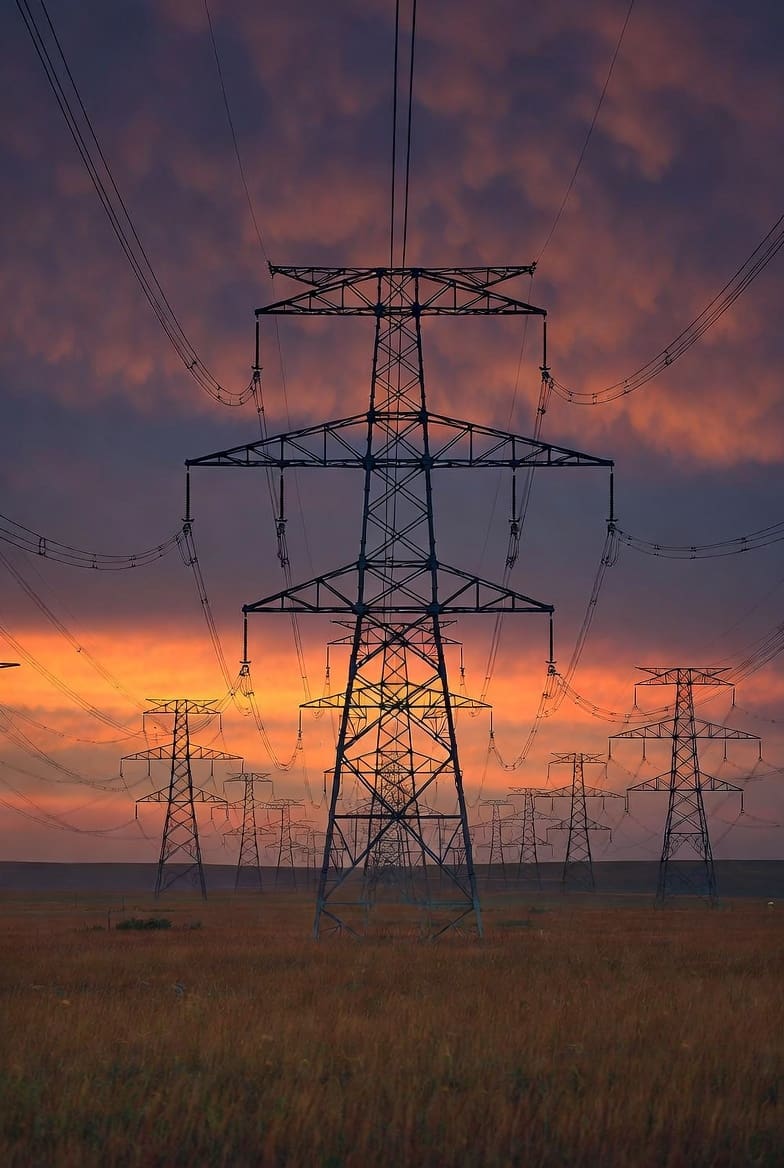
Alberta’s grid operator, like every other grid operator, keeps a waiting list known as a queue. As of February, the data-centre projects sitting in Alberta’s queue wanted about 20.7 gigawatts of power. For scale, Alberta’s entire electricity system, on the coldest evening in its history, has never demanded much more than 12.0 gigawatts.
How much of that 20.7 gigawatts will actually get connected? Wary of promising more than the system can deliver, the operator has capped new data-centre connections at 1.2 gigawatts through 2028. And every watt of that allowance is already spoken for.
Think of the cap as a door. The queue is seventeen times deeper than the door is wide.
Numbers like these are usually offered as evidence of a bubble. And they might be. The hyperscalers (the handful of companies that operate computing at planetary scale) plan to spend roughly US$725 billion on capital projects this year alone, up 77 per cent from last year’s record. Individual campuses are now being announced at scales that once described national programs. One approved development in Utah, for example, targets nine gigawatts of on-site generation, phased over years.
Nine gigawatts, operated the way data centres operate, would consume nearly 80 per cent as much electricity in a year as the entire province of Alberta: every home, every office tower, the oil sands, the petrochemical corridor, all of it. One campus, 80 per cent of a province.
So yes: it has the smell of a mania.
But last week I argued that we should judge infrastructure by what a century of service buys, not by what an election cycle of construction costs. This week, I want to apply that lens to the strangest infrastructure story of our time.
Follow the logic of a single AI data centre trying to plug into the grid, step by step, and you arrive somewhere genuinely odd. Almost every future you can imagine for artificial intelligence (triumph, disappointment, or something in between) leaves Canada holding much the same prize.
The question this week is not whether the AI boom is real.
It is: what does the AI boom actually leave behind?
The religion of five nines
The technology industry measures reliability in nines: 99.9 per cent availability means nearly nine hours of downtime a year, while 99.999 per cent, the “five nines” standard the tech industry treats as gospel, allows a little over five minutes in the span of an entire year.
The Uptime Institute, the industry’s certification body, reserves its highest tier for facilities designed so that any single failure (of a transformer, a switch, a cable, or any other critical component) can happen without interrupting the computers inside. The basic idea, called 2N, is simple: build two complete power systems, keep both running, and make sure either one can carry the entire data centre on its own. If one fails, the other takes over without the computers noticing.
Hold that number in your mind: five minutes a year.
Now consider the popular idea that data centres can simply build their own power and skip the grid entirely. The industry calls it bring-your-own-power, and on paper the idea is seductive. Alberta, especially, likes the sound of it. We have gas, land, and a market that allows generators to build.
But a data centre does not need merely a power plant.
It needs a power system that fails less often than five minutes a year.
The island that isn’t
I spent two decades in operations, from oil-sands plants to offshore platforms, and the islands I worked on taught me what islanding costs.
A facility that must run entirely on its own generation cannot simply build enough capacity to serve its normal load. It has to build enough to survive its worst day: units down for planned maintenance; another unit tripping unexpectedly during that maintenance; fuel deliveries that never miss; spare parts that are always available; and an operating team capable of holding the whole system together at three in the morning during a February cold snap.
For a load that tolerates only five minutes of failure a year, the arithmetic is brutal.
The grid, by contrast, is a continent-wide pool of shared redundancy, refined over a century. Every connected machine helps back up every other connected machine. You do not need to own every spare transformer, generator and transmission line. You need access to a system that has them.
This is why I have never believed the narrative that data centres will truly island, and why the empirical record keeps agreeing with me.
The most instructive case is in Pennsylvania, where Amazon bought a campus beside the Susquehanna nuclear plant: about as favourable a setting for grid independence as physics allows. The arrangement still ended up before the US federal energy regulator, which in late 2024 rejected an expanded behind-the-meter deal on a split vote. By late 2025, the regulator was writing rules governing which co-location arrangements would be allowed at all.
Rival utilities intervened, arguing that the campus would rely on the grid’s reliability services without paying its share of the cost. Strip away the legal language and the objection was simple:
There is no such thing as almost connected.
So the data centres will connect. Every serious proponent eventually files the application, and many file it with a fig leaf attached: grid connection “for backup only.”
Which brings us to the part of the story that rarely makes the headlines, because it lives in interconnection studies instead of press releases.
What a gigawatt guest does to a house
A grid is not a warehouse with electricity sitting on shelves. It is a machine balanced in real time, planned around a rule called N-1: the system must survive the sudden loss of its single largest component without collapsing.
Historically, that largest component was usually a generator or a major transmission line. Connect a gigawatt-class data centre (even one that promises to supply most of its own power) and you may have just created a new largest component.
A campus that runs on its own generation holds its grid connection as a lifeline, and the moment its island stumbles, a gigawatt of demand arrives on the grid in seconds. The system experiences that arrival exactly as it would the sudden loss of a gigawatt generator. Frequency lurches. Reserves deploy. Operators earn their salaries.
The system must therefore carry enough reserve to catch the data centre at its worst moment, whether or not that moment ever comes.
And N-1 is only the beginning of the study list. Engineers must assess voltage stability, fault levels, transformer loading, and what happens on the local network when the campus switches between its own generation and the grid. Each question can force the system around the connection point to become stronger.
This is the quiet truth of “backup only” connections: there is no small way to plug in a big machine.
The upgrades arrive as new substations, reinforced lines, larger transformers and, crucially, people (the utility crews and planning engineers who are already among the scarcest resources in the industry).
A large power transformer has a service life measured in decades and, increasingly, a delivery time measured in years. Order books fill during one boom and deliver into the next.
Who pays for the wires
Here is where the story stops being an engineering curiosity and becomes a citizens’ question.
Who pays when one customer’s growth forces the entire system to expand?
Under the traditional utility model, the answer is simple. A utility builds what the system needs, and the cost enters something called the rate base: the pool of assets on which the utility earns a regulated return. Customers then pay for those assets through their electricity rates, typically over decades.
It is a century-asset financing machine. It is also, by default, a socializing machine.
When a boom triggers new generation, substations and transmission lines, everyone’s bill can end up carrying the cost.
Virginia, the world’s data-centre capital, shows what that looks like at full scale. The state legislature’s own watchdog concluded in late 2024 that unconstrained data-centre growth could add as much as US$18 billion to generation and transmission costs by 2040, with a typical household’s share landing between US$168 and US$444 a year.
The same study made a point worth holding onto: under existing rates, the data centres were paying their full cost of service. Nobody was cheating. The costs were shifting anyway, because the rules were written for a world in which no single customer class could bend the entire system’s growth curve.
Those rules are now being rewritten in real time, and the direction is telling.
Ohio’s regulator approved a tariff requiring large data centres to pay for at least 85 per cent of the capacity they request, whether or not they use it. Virginia has moved toward a dedicated rate class and financial guarantees for grid-scale loads. Alberta’s operator, having allocated its 1.2-gigawatt interim door, is now designing the long-term framework.
The common thread is cost causation: You asked for it. You underwrite it.
This is the right fight to have, and citizens should watch it closely, because the stranded-cost risk is real and asymmetric.
A data centre’s business plan runs on a five-year horizon.
A transmission line does not.
All roads lead to the grid
Now come with me down the roads, because this is where the argument turns. There are three of them, and they all end in the same place.
Road one: AI succeeds, and engineering does what engineering does.
For half a century, the energy efficiency of computing roughly doubled every eighteen months, a pattern known as Koomey’s law. The pace has slowed as the physics of shrinking transistors has become harder, to roughly one doubling every two and a half years. But even that slower rate compounds to an order-of-magnitude improvement over a decade. And the entire industry is now focused on inference efficiency (the energy cost of running AI models, as opposed to training them) with the intensity it once devoted to clock speed.
If the machines eventually produce ten times as much useful work from every watt, and history says they will, then the demand forecasts justifying today’s buildout will prove too high. The campuses will draw a fraction of what they contracted, and the grid strengthened to serve them will be generously oversized.
Road two: optionality meets reality.
Recall the queue that is seventeen times deeper than the door. Part of what fills it is not demand at all. It is hedging. For every data centre the tech companies know they will actually build, they file connection requests in several jurisdictions at once, spending a sliver of the capital at their disposal to hold a place in every line. Whichever grid clears first wins the campus; the rest of the requests quietly expire. Interconnection applications are cheap. Being late to compute is expensive. So the companies buy optionality the way they buy chips: in bulk.
Now run the film forward. System operators complete their studies, perform the upgrades and finally announce to the queue: you are cleared to connect. And then some of the tech companies politely decline, because their campus was built two jurisdictions over.
The studies were real. The reinforcements were real. The load never arrives.
This, incidentally, is why regulators have started demanding minimum-take contracts and megawatt-sized deposits. If holding a place in the queue costs real money, phantom requests evaporate and the serious ones remain. Although, given the extraordinary amount of capital now backing data-centre construction, even that may not be a complete solution.
Road three: the bubble bursts.
The models plateau. The revenue never materializes. The chips, which become obsolete in three to five years, are not replaced. Some of those vast campuses go quiet. This is the future the short-sellers are pricing, and it cannot be ruled out.
Walk any of these roads to its end, and look around. The servers are gone, or elsewhere, or sipping a tenth of the power. The substations are not. Neither are the reinforced lines, the upgraded transformers, or the strengthened network around every connection point. All of it remains, engineered for decades and sited in places that wanted industry.
The boom’s tombstone is a stronger grid.
The only losing scenario is the one in which we build nothing and the demand shows up anyway.
There is honest fine print. “We inherit capacity” and “we paid the right price for it” are different claims, which is why the who-pays reforms matter so much. And the distributed counter-case, the argument that rooftop solar, batteries and microgrids make big wires less necessary rather than more, deserves better than a parenthesis. It will get its own essay soon.
But the destination stands, whichever road delivers us there. And it has a precedent so exact it gives me chills.
Quiet conductors
In the late 1990s, telecommunications companies buried roughly 80 million miles of fibre-optic cable on the theory that internet traffic would double every hundred days. They spent something approaching US$1 trillion to do it.
The traffic grew, but not like that.
By the early 2000s, industry estimates suggested that 85 to 97 per cent of the fibre was dark: buried, intact and carrying nothing. The companies that laid it died spectacular deaths. Global Crossing alone went into bankruptcy with US$12.4 billion in debt, and the glut stood as the era’s monument to wasted capital.
Then something instructive happened.
New companies bought the fibre for pennies on the dollar. One of them was a search engine you’ve undoubtedly heard of. From the mid-2000s, Google quietly accumulated “dark fibre”, and on that discounted inheritance it and others built the broadband, streaming and cloud eras.
Better still, the technology inside the glass kept improving. Dense wavelength-division multiplexing (a technique for sending many colours of light down a single strand) multiplied the capacity of each fibre by orders of magnitude.
The overbuild did not merely get used. It became more valuable as engineering improved inside it.
Today, dark fibre is not an embarrassment. It is a premium product that data-centre operators lease and light themselves, and the market continues to grow.
The bubble was real. The waste was real. The bequest was real too. All three statements can be true at once.
That is the pattern our era’s grid buildout may be on course to repeat, and it deserves a name: quiet conductors.
Transmission corridors, substations and interconnection capacity built for a boom, waiting (like dark fibre) for the future to grow into them.
The parallel extends to the technologies that multiply what existing infrastructure can carry. Reconductoring an existing line with advanced conductors can roughly double the capacity of the corridor. Dynamic line ratings, which measure actual conditions instead of assuming worst-case weather, can add 10 to 30 per cent of capacity at a fraction of the cost of new construction.
The wires, like the glass, become more valuable as engineering improves inside them. And we know what grows into waiting capacity, because access to power has transformed places before.
Aluminum can only be made by electrolysis. That is why the industry was born at Niagara Falls within a decade of the first large generators, and why that once-unfashionable border town was, by the 1950s, the largest electrochemical centre on Earth.
Before the Tennessee Valley Authority, fewer than one in ten homes in the region had electricity. The dams helped turn one of North America’s poorest regions into an industrial economy within a generation.
The lesson of every access-to-power revolution is the same. It is the inverse of the economist’s rebound effect: Build the capacity, and uses nobody forecast arrive to fill it.
The planners of 1957 never imagined a data centre. And we cannot imagine what will show up looking for a strong connection in 2057.
And that is precisely the argument for having one.
Should we say yes anyway?
Let me put the uncomfortable version of the question plainly, because it is the one that matters in a province with a queue seventeen layers deep.
If some of this buildout lands on household bills, and let’s be honest, some of it always does, should citizens support it anyway?
The case against deserves its full weight. Rate increases are regressive; a $20 monthly increase means nothing to a hyperscaler and something real to a pensioner. The stranded-cost risk is genuine, and “trust us, demand is coming” has burned ratepayers before.
Any honest yes therefore comes with conditions: large loads underwrite the capacity they request; minimum-take provisions and financial guarantees carry the stranded risk; and regulators hold the line they have begun drawing from Ohio to Virginia to Alberta.
And I would push one step further. Impact-neutral should be the floor, not the ceiling. A backup connection is not a passive product; it is access to a century of accumulated, publicly underwritten redundancy, the most valuable insurance policy ever engineered. There is a strong case that the companies leaning on it should do more than cover their own costs.
Charge a premium for access to the backup grid, and direct the proceeds to the households in energy poverty for whom every rate increase bites hardest. The hyperscalers would be buying the one thing no island can build them, which is shared reliability. The revenue would flow to the people for whom reliability is least affordable. That is not a penalty. It is a fair price for the best insurance ever built, paid to the society that spent a century building it.
With those conditions met, my answer is yes. And harkening back to my century asset article, the reason for this answer is the denominator.
A transformer serves for 35 years or more. Conductors run for 50 to 70. Towers, refurbished and resocketed, can stand for the better part of a century.
The grid is not so much a single century asset as a multi-generational platform with replaceable organs, which is the same architecture as the hydro stations celebrated in last week’s article. Civil works that endure, machinery that renews inside them.
Price the AI buildout against a five-year hype cycle and it looks reckless. Price it against the working life of what gets built (and against every industry that might connect cheaply and quickly because capacity is already waiting) and it starts to look like the cheapest ambitious thing this country could do.
Last week I wrote about the grid the machines might leave behind, and I meant the phrase as a warning that became a hope.
The dot-com bubble’s fibre went dark and waited. Then the whole digital century moved in.
If the AI era ends through the sheer accident of overreach, it will leave Canada wired the way the telecoms left the world glassed.
Future generations will light up what the AI boom left behind.
The boom is loud.
The bequest is quiet.