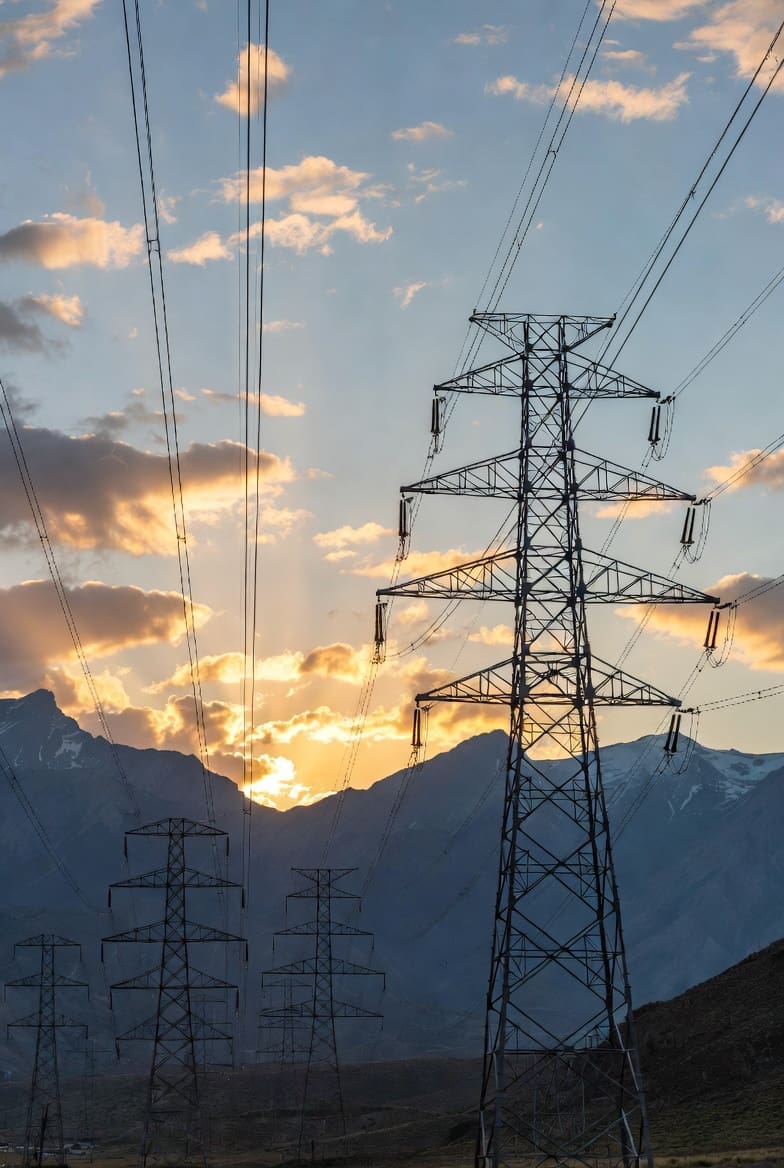
The technology has existed for sixty years. The thirteen governments that would have to share it are the holdup.
Correction (July 2026): An earlier version of this article, following a March 2026 Energy Regulation Quarterly analysis, attributed Alberta’s September 19–28, 2025 zero import capability to deliberate AESO reliability deratings. Market Surveillance Administrator data show that window reflected a planned outage on the BC/MATL intertie, with the Saskatchewan link separately out of service for converter repairs. The opening section has been revised accordingly, with thanks to a sharp-eyed reader. The article’s argument is unchanged, and if anything reinforced: one planned transmission outage, coinciding with converter repairs that had already sidelined the Saskatchewan link, was enough to sever Alberta from every neighbouring grid.
In September 2025, as unseasonably warm early-autumn weather pushed Alberta’s electricity demand well above the norm for the month, the province spent ten days as an electrical island. Its single high-voltage connection to British Columbia and Montana (the two interties operate as one, since a trip on the B.C. line automatically severs the Montana tie) was taken offline for a planned maintenance outage from September 19 to 28. Its only other link, to Saskatchewan, had already been out of service for the better part of a year awaiting repairs to an ageing converter station. For those ten days, Alberta could neither import a megawatt from its neighbours nor export one to them.
There was no conspiracy, and nothing tripped offline that week. The line’s outage was routine and scheduled well in advance; the converter had been sidelined by an equipment failure months earlier and was awaiting repairs. That is precisely what ought to trouble anyone who assumes a neighbour is a reliable safety net: when a province’s entire connection to the continent hangs on one transmission line and one converter station, the ordinary rhythm of maintenance and repair is enough to sever it. The consequences were not hypothetical. Earlier that month, with import capability already reduced by a related scheduled outage, the AESO declared a level-3 energy emergency alert during an evening peak, one step short of rotating outages. And the market monitor noted that taking the intertie down also removed the frequency-response support the B.C. line normally provides, forcing the operator to procure additional reserves for the duration.
Even when the lines are in service, Alberta cannot lean on them fully. The AESO’s 2025 Reliability Requirements Roadmap is explicit that import capability is frequently held below what the interties could physically carry, because a single intertie carrying a large import is itself one of the largest contingencies on the system: if the line trips, that supply disappears instantly, and there is not yet enough fast frequency response on the system to ride through the loss. The Roadmap sets out a plan to procure up to 750 megawatts of such response to support higher import limits, on the order of 800 megawatts on the B.C. intertie, over the coming period.
A dependency that vanishes for routine maintenance, and is deliberately constrained even when available: that is what Alberta’s connection to its neighbours amounts to today.
That episode offers a small window onto a much larger, and until recently oddly neglected, fact about this country: Canada is not really one electricity system. It is thirteen, loosely stitched together at the seams and, in many cases, more tightly bound to the United States than to one another. Interprovincial and international electricity trade together amount to only a small share of total generation. The grids were built to run north–south, serving American markets, rather than east–west across Canada.
A legacy layout, not a law of nature
For decades, this fragmentation was treated as an awkward quirk rather than a problem worth serious investment, and for good reason. The north–south orientation was a rational response to its era: generation and load developed on a continental north–south axis, provincial systems matured independently under provincial jurisdiction, and there was little commercial reason to string expensive high-voltage lines across the Rockies or the Canadian Shield to trade power east–west. Each province optimised for itself, and given the incentives of the time, that was sound engineering and sound economics.
What has changed is the context, not the layout. The pressures now driving electricity demand (electrification, industrial expansion, and the arrival of large new loads) are national in scale, and the value of provinces being able to lean on one another has risen sharply. The question is no longer “why did we build it this way,” which has a good answer, but “is this still the right way,” which increasingly does not.
The politics have caught up. In the space of a few months, interprovincial transmission has gone from the subject of think-tank white papers to a stated federal priority, complete with named projects and public funding. Two questions follow: why the case has suddenly become so compelling, and why the projects Ottawa has actually put on the table tell a more sobering story than the rhetoric surrounding them.
How weak the seams really are
Alberta, a province of over five million people with a large industrial base, is connected to British Columbia by a single high-voltage transmission line. As part of the Western Electricity Coordinating Council’s Path 1, it can carry roughly 1,200 megawatts west to east and 1,000 megawatts east to west. In practice, for the contingency reasons already described, only a fraction of that is reliably usable in the direction that matters most. Records show Alberta has consistently held the line to a degraded fraction of its rating, accepting only 40 to 60 per cent of the power British Columbia was able to send east, even while relying on close to 90 per cent of the same intertie’s capacity to draw power the other way. The dependable capability therefore sits well below the nameplate rating, and the constraint falls hardest on the direction that would let the neighbouring system sell in.
The connection to Saskatchewan is smaller still, at roughly 150 megawatts through an ageing converter station. As last year demonstrated, that link can spend the better part of a year out of service when the converter requires major repairs. The Montana intertie adds only a few hundred megawatts, and only when the B.C. intertie is available. Taken together, Alberta’s links to the rest of the continent are modest in scale and, in practice, more constrained than their headline capacities suggest.
The deeper point is not that any one line is undersized. It is that a single line, however large, cannot be fully relied upon, as September’s maintenance outage made plain. Redundancy is what makes transmission capacity usable. With a second independent path, no single failure, and no single maintenance window, becomes an islanding event, allowing operators to make far greater use of the infrastructure already in place. A second connection to British Columbia would not simply add its own megawatts; it would unlock much more of the capacity already strung across the mountains, allowing Alberta to treat B.C.’s vast hydro reservoirs as a near-instant balancing resource rather than something against which it must constantly insure.
The benefits would run in both directions, and this is where the case becomes especially compelling for Alberta. British Columbia is in the midst of its largest generation build-out since the 1960s, procuring thousands of gigawatt-hours of new wind and solar through successive competitive calls for power. BC Hydro is explicit about the strategy: new wind expands energy supply, while its flexible hydroelectric system provides reliability when the wind subsides. That combination, variable renewables backed by dispatchable hydro storage, is precisely what a stronger intertie would allow the two provinces to share.
When Alberta’s wind and solar fleets are generating strongly and domestic demand is satisfied, surplus electricity could flow west, allowing British Columbia to hold water behind its dams rather than release it. When Alberta comes up short, that stored hydroelectric energy could flow back east on demand. In effect, British Columbia’s reservoirs become a giant battery for Alberta’s wind and solar, while Alberta’s low-cost renewable generation helps conserve British Columbia’s water until it is most valuable.
Why this is a direct-current question
Here a piece of engineering enters the story that is easy to gloss over, but it shapes what “expanding the interties” actually means.
The connection between Alberta and Saskatchewan is not simply a transmission line. It passes through a high-voltage direct-current (HVDC) converter station because the two provincial grids are not synchronised. They operate as separate alternating-current systems that cannot simply be bolted together. HVDC is what allows two unsynchronised grids to exchange power at all, while giving operators precise control over both the direction and the quantity of power flowing between them.
That controllability is not a technical footnote. An intertie designed to balance variable wind and solar with dispatchable hydro is exactly the kind of system in which flows must be adjusted deliberately, minute by minute. It also underpins one of the strongest arguments for expanding interties: a province’s ability to build renewable generation is ultimately constrained by its ability to export surplus electricity when local demand is met and import firm power when it is not. Weak interties cap how much wind and solar a system like Alberta’s can economically absorb. Strong ones raise that ceiling. The transmission question and the renewables question are, in many respects, the same question viewed from different angles.
None of this is exotic. Canada has been a world leader in high-voltage direct-current transmission since the late 1960s, when it built one of the world’s first commercial HVDC links to Vancouver Island and then committed to carrying Nelson River hydro south by direct current. The technology is mature, proven, and, where two asynchronous grids must be connected, often the only practical solution. The Alberta–Saskatchewan boundary is precisely such a case.
The case, quantified; the projects, named
The economic case has also become sharper, and increasingly favourable. A 2025 modelling study cited in Ottawa’s national electricity strategy found that roughly doubling the British Columbia–Alberta intertie would generate about $1.7 billion in net benefits by 2050, and that tripling the Manitoba–Saskatchewan connection would yield around $2.3 billion. The C.D. Howe Institute, drawing on modelling by Seatle and McPherson, puts the corresponding benefit-to-cost ratios at roughly six to one and four-and-a-half to one respectively.
A separate 2020 analysis by Corporate Knights found that a $1.7 billion federal contribution to interprovincial transmission could unlock an additional $6.6 billion in private transmission investment, and a further $92.5 billion over a decade in new renewable generation. At the national scale, one widely cited ballpark from grid experts puts the cost of a genuinely pan-Canadian grid in the neighbourhood of $35 billion.
Figures such as “six to one” should be interpreted for what they are: the outputs of models built on assumptions about load growth, fuel prices, construction costs, and discount rates. They are not forecasts; they are structured estimates. But even after allowing for generous uncertainty, they all point in the same direction.
The politics soon followed. On 4 March 2026, most provinces and territories announced a national energy corridor partnership committing to advance interprovincial and territorial transmission. Then, on 26 June, Ottawa identified five intertie projects as candidates for designation as projects of national importance. Three of the five touch the western provinces: restoring the Alberta–British Columbia intertie, replacing the ageing McNeill converter station near Medicine Hat on the Alberta–Saskatchewan boundary with modern HVDC technology, and a much larger expansion of the Saskatchewan–Manitoba connection along the Regina–Winnipeg corridor.
Here, however, ambition meets arithmetic. The modelling case for British Columbia and Alberta was for roughly doubling the intertie, an expansion measured in thousands of megawatts. The project actually announced would add roughly 150 megawatts. The Alberta–Saskatchewan converter upgrade is also modest in absolute terms, at about 250 megawatts, though in fairness that increase would more than double the capacity of a link that today carries only around 150, so for that particular tie it is far from trivial. Of the three, only the Saskatchewan–Manitoba intertie, at up to 2,000 megawatts, approaches the transformational scale the economic analysis envisions.
Set the stated ambition of building one economy out of thirteen against the projects actually proposed, and the gap is difficult to ignore. On Alberta’s borders in particular, the announced investments are incremental where the economics point toward a step change.
The real obstacle
This gap is the tell, and it points to the thing worth saying plainly: the engineering was never the hard part.
Canada knows how to build high-voltage direct-current interties. It has been doing so for nearly sixty years. The converter technology exists, the economic case is strong, and the pressures driving demand are only intensifying. What has held interprovincial transmission back is not a technical problem waiting to be solved. It is the absence of any institution responsible for optimising the grid as a whole.
Provincial regulators, by design, look inward. The federal energy regulator has only limited jurisdiction. Market operators stop at their own borders. National reliability rests on a patchwork of bilateral agreements, operational goodwill, and a measure of luck. There is no body charged with planning the system across provincial lines, nor any settled framework for deciding who pays when the costs and benefits of a new intertie fall unevenly between provinces.
The institutional divide runs deeper still. Alberta operates a competitive wholesale electricity market, while British Columbia, Saskatchewan, and Montana rely on vertically integrated utilities that plan, build, own, and operate their systems. Reconciling those fundamentally different models (not merely stringing wire between them) is part of what has slowed progress on the Alberta–British Columbia intertie. The obstacle is institutional all the way down.
That institutional reality is also why the reliability rationale for the persistent deratings does not go unchallenged. Some observers, including voices in British Columbia, argue that “reliability” can shade into economic protectionism. Limiting imports keeps lower-cost electricity from competing with Alberta generation and softens Alberta prices, a commercially convenient outcome presented as a safety measure. Clean Prosperity’s January 2026 report estimates that import curtailment costs Alberta consumers roughly $300 to $500 million annually by forcing demand to be met with higher-cost local generation instead of cheaper imports, although other analyses spread a similar total over multiple years rather than annually. Defenders of the AESO’s approach can point out that intertie limits bind in only a small share of hours across the year; the rejoinder is that those are precisely the scarce, high-priced hours when imports are most valuable, which is how the dollar figures grow large even when the curtailed hours are few. The precise figure remains contested, but the direction of the effect is not.
The fairest reading is that both explanations can be true at once. The contingency-reserve risk is genuine and well documented. So too is the fact that a province with a competitive market and limited interconnection has an economic interest in preserving the status quo. Deciding where prudence ends and protectionism begins is precisely the kind of question for which Canada has no obvious referee.
What has shifted the calculus is not a breakthrough in engineering or climate policy, but something simpler: a growing desire to depend less on an increasingly unpredictable neighbour to the south. Recast as an issue of economic sovereignty rather than climate policy, interprovincial transmission has found support well beyond its traditional constituency. That reframing is why the file moved at all.
Which leaves a clear-eyed assessment of where things stand. The vision is real. The economics are compelling. The technology is mature. The projects now on the table represent genuine progress after decades in which interties were discussed largely in the abstract. Yet the distance between what the modelling supports and what governments have actually proposed is a reminder that this was never primarily a problem of engineering. It is a problem of governance: who agrees to build the lines, who pays for them, and who is willing to let a neighbour’s grid become part of their own. That is the part no converter station can solve.
It is, however, a part that can be built, just as deliberately as a converter station. The ingredients are known: a standing body with a mandate to plan transmission across provincial seams, a settled framework for allocating costs when benefits fall unevenly, and federal capital used as the bridge between provincial interest and national benefit, an approach the recent federal–Alberta memorandum of understanding has begun to sketch. None of this requires constitutional change. It requires the same thing the converter stations required in the 1960s: a decision to build. The June announcements suggest governments have finally noticed the problem. Whether they build the institutions to match the wires is the question the next round of projects will answer.