blog menu

Close X

Blog Categories

Start here

Solar Makes Cents: How Rooftop Solar Can Save Canadian Families Money

read the post >

Clean Tech Investment Tax Credit: Your Shortcut to Lower Bills & Higher Profits

read the post >

Next post >

Energy Economics >

Reduce electricity bills, increase property value, and achieve strong financial returns while guarding against rising utility rates.

Emerging Energy Tech & Innovation >

Emerging Energy Tech >

Explore the latest in energy technology, smart energy management, AI optimization, and next-generation innovations.

Energy Market Insights >

Learn about macro-level industry trends, policy shifts, and energy market dynamics.

Energy Sovereignty & Independence >

Energy Sovereignty >

Reduce reliance on external and foreign energy, achieve energy stability, and gain control over your energy future. 

Close X

Blog Categories

Start here

Hyper‑realistic image showing fixed‑tilt and single‑axis tracker solar panels in a snowy Canadian prairie landscape.

Solar Makes Cents: How Rooftop Solar Can Save Canadian Families Money

read the post >

Hyper‑realistic image showing fixed‑tilt and single‑axis tracker solar panels in a snowy Canadian prairie landscape.

Clean Tech Investment Tax Credit: Your Shortcut to Lower Bills & Higher Profits

read the post >

< Prev Post

Clean Tech Investment Tax Credit: Your Shortcut to Lower Bills & Higher Profits

read the post >

Energy Economics >

Reduce electricity bills, increase property value, and achieve strong financial returns while guarding against rising utility rates.

Emerging Energy Tech & Innovation >

Emerging Energy Tech >

Explore the latest in energy technology, smart energy management, AI optimization, and next-generation innovations.

Energy Market Insights >

Learn about macro-level industry trends, policy shifts, and energy market dynamics.

Energy Sovereignty & Independence >

Energy Sovereignty >

Reduce reliance on external and foreign energy, achieve energy stability, and gain control over your energy future. 

Are Solar Trackers Worth The Investment?

April 25, 2026

blog menu

Close X

Blog Categories

Start here

Next post >

Solar Makes Cents: How Rooftop Solar Can Save Canadian Families Money

read the post >

Clean Tech Investment Tax Credit: Your Shortcut to Lower Bills & Higher Profits

read the post >

Energy Economics >

Reduce electricity bills, increase property value, and achieve strong financial returns while guarding against rising utility rates.

Emerging Energy Tech & Innovation >

Emerging Energy Tech >

Explore the latest in energy technology, smart energy management, AI optimization, and next-generation innovations.

Energy Market Insights >

Learn about macro-level industry trends, policy shifts, and energy market dynamics.

Energy Sovereignty & Independence >

Energy Sovereignty >

Reduce reliance on external and foreign energy, achieve energy stability, and gain control over your energy future. 

Close X

Blog Categories

Start here

< Prev Post

Hyper‑realistic image showing fixed‑tilt and single‑axis tracker solar panels in a snowy Canadian prairie landscape.

Solar Makes Cents: How Rooftop Solar Can Save Canadian Families Money

read the post >

Hyper‑realistic image showing fixed‑tilt and single‑axis tracker solar panels in a snowy Canadian prairie landscape.

Clean Tech Investment Tax Credit: Your Shortcut to Lower Bills & Higher Profits

read the post >

Clean Tech Investment Tax Credit: Your Shortcut to Lower Bills & Higher Profits

read the post >

Energy Economics >

Reduce electricity bills, increase property value, and achieve strong financial returns while guarding against rising utility rates.

Emerging Energy Tech & Innovation >

Emerging Energy Tech >

Explore the latest in energy technology, smart energy management, AI optimization, and next-generation innovations.

Energy Market Insights >

Learn about macro-level industry trends, policy shifts, and energy market dynamics.

Energy Sovereignty & Independence >

Energy Sovereignty >

Reduce reliance on external and foreign energy, achieve energy stability, and gain control over your energy future. 

At GreenKey, our mission is to help Canadian families, businesses, and municipalities spend less money on electricity, so we can dedicate our resources to the things that really matter. We make sure you get the best deal on energy by providing unbiased expert analysis and professional project consulting for residential, commercial, and utility-scale projects.

Do less. Save more. Spend money on life, not electricity.

Own your energy. Grow your green.

GreenKey Homes for families & homeowners

GreenKey Consulting for developers

GreenKey Consulting for Businesses

GreenKey Consulting for Communities

As Canada’s solar industry accelerates toward net-zero goals, utility-scale developers across the country repeatedly face the same strategic question: Are single-axis trackers worth the added complexity and cost compared to traditional fixed-tilt systems?

Canada’s vast geography spans latitudes ranging from about 42°N in the south to well over 60°N in the territories, creating highly seasonal solar resources. Long summer days offer strong production potential, but short winter days, low sun angles, heavy snowfall in many regions, and extreme cold (often reaching -40°C) make the tracker decision particularly nuanced. 

Trackers can deliver 15–25% higher annual energy production by continuously optimizing panel orientation, while also extending generation into valuable morning and evening hours, especially when paired with bifacial modules that benefit from snow’s high albedo for rear-side gains. Yet they introduce higher upfront capital costs (often a 10–20% premium for racking, foundations, and controls), elevated operations and maintenance requirements, and increased mechanical risks in harsh winter conditions.

In provinces like Ontario, Alberta, Saskatchewan, and British Columbia, where utility-scale solar is expanding rapidly, developers must weigh yield gains against real-world challenges such as snow accumulation, ice buildup, wind loads, and remote logistics. Similar considerations arise in Quebec and even in remote northern communities exploring solar to reduce diesel reliance, though tracker adoption there is less common due to maintenance concerns in extreme environments.

Real-world Canadian projects illustrate the evolving picture. Many early utility-scale installations relied on fixed-tilt arrays for simplicity, particularly on irregular terrain. More recent developments increasingly incorporate single-axis trackers, often terrain-following designs optimized for Canadian winters, with manufacturers like Nextracker and Polar Racking adapting systems for snow shedding, hail protection, and cold-weather reliability.

At the same time, the practical hurdles are significant. Canada’s cold-climate realities test mechanical components in ways milder regions do not, raising questions about long-term availability, spare parts access, and lender comfort with moving parts over a 25–30 year asset life. Would the extra kilowatt-hours truly justify the incremental expense and operational demands?

Fixed-Tilt vs. Single-Axis Trackers in High-Latitude Contexts

Utility-scale solar projects in Canada rely on one of two primary mounting approaches: fixed-tilt arrays or single-axis trackers. Understanding the fundamental differences between them is essential before diving into a detailed assessment, especially in our country’s challenging high-latitude environments.

Fixed-tilt systems position solar modules at a static angle, typically starting near the site’s latitude. For maximum annual energy production, the optimal tilt is often close to latitude or slightly lower (a few degrees) in many locations to favor summer production. However, in snowy Canadian regions, a steeper tilt (latitude + 10–15° or more) is frequently chosen as a compromise to improve winter performance and promote passive snow shedding. Flatter tilts may sometimes be considered to reduce wind loading, but they can increase snow accumulation risks.

Single-axis trackers, by contrast, rotate panels from east to west throughout the day (usually on a horizontal north-south axis) to keep them more perpendicular to the sun’s rays. Most utility-scale deployments use horizontal single-axis trackers (HSAT). Modern designs often incorporate “terrain-following” capabilities and advanced features like backtracking to minimize inter-row shading, snow-shedding algorithms, and safe-stow modes for high winds or heavy snow.

In milder climates, trackers commonly deliver 15–25% higher annual energy yield than optimally tilted fixed systems. Gains come primarily from better morning and evening production and reduced cosine losses. However, at Canadian latitudes the benefits are more nuanced. The sun’s lower winter arc and longer summer days affect performance, and high diffuse light fractions in cloudy or snowy conditions can narrow the gap. Studies and real-world data suggest gains often trend toward the lower end of that range (around 12–20%) in high-latitude settings. However, bifacial modules paired with trackers can boost results further by capturing reflected light, particularly from snow-covered ground, which has high albedo (sunlight reflection).

Canada’s cold-climate realities add another layer. Heavy snowfall, ice buildup, extreme cold temperatures, and high winds test mechanical reliability. Fixed-tilt arrays excel here: they are robust, with no motors or drives to fail, and can be engineered with steeper tilts or snow-optimized designs for passive shedding. Trackers require sophisticated controls, including sensors and algorithms that automatically adjust to “snow dump” positions or stow flat in high winds. 

Canadian manufacturers like Polar Racking have developed terrain-following single-axis trackers with helical pile foundations and features tailored for northern conditions, while suppliers such as Nextracker offer snow-shedding rotations and hail protection. Despite these adaptations, trackers still carry higher mechanical risk and competing safe modes (e.g., wind vs. snow protocols) can occasionally lead to unintended snow accumulation.

Early Canadian utility-scale projects often defaulted to fixed-tilt for its simplicity and lower risk profile, especially on irregular or space-constrained sites. More recent developments increasingly incorporate single-axis trackers where land is abundant and yield optimization matters most. Examples include tracker-supplied projects in Alberta and adaptations for winter resilience across the Prairies and beyond. The Canadian solar tracker market has grown steadily, driven by utility-scale expansion and innovations addressing our unique conditions.

Here’s a high-level comparison:

AspectFixed-Tilt SystemsSingle-Axis Trackers
Annual Yield GainBaselineTypically +12–25% (often lower at high latitudes)
CAPEX PremiumLower (baseline)+10–20% (racking, drives, foundations)
O&M RequirementsLower (0.5% of CAPEX annually, typical)Higher (up to double, due to moving parts)
Land Use (GCR)Higher density possibleLower (more spacing to avoid shading)
Best Suited ForIrregular terrain, high wind/snow, remote sites, capital constraintsFlat/abundant land, high-value production profiles, bifacial synergy
Risk ProfileSimpler, more bankable in harsh wintersMechanical complexity, but improving cold-weather designs

Ultimately, neither technology is universally superior. Fixed-tilt offers reliability and simplicity which is critical in remote northern communities or regions with extreme weather. Trackers maximize energy harvest and can improve the daily production profile to better match grid demand, potentially increasing revenue in merchant or time-of-day markets. The real decision hinges on rigorous, site-specific modeling rather than general rules of thumb.

Step-by-Step Assessment Process

Once you understand the basic trade-offs between fixed-tilt and single-axis tracker systems, the real work of running a rigorous, site-specific analysis begins. In Canada’s high-latitude and cold-climate conditions, generic rules of thumb (such as “trackers always add 20% yield”) can mislead. The only reliable way to decide is to follow a structured workflow that quantifies production gains, incremental costs, added maintenance, and overall project economics.

Here is the four-step process that can be used for evaluation of any utility scale solar project. This process applies well to projects anywhere in Canada, from the Prairies and Ontario to Quebec, British Columbia interiors, or even more remote northern sites.

Step 1: Site-Specific Production Modeling

Start with accurate energy yield modeling using industry-standard tools such as PVsyst, NREL System Advisor Model (SAM), or PV*SOL. These allow side-by-side simulations of fixed-tilt versus single-axis tracker configurations.

Key inputs and considerations for Canadian sites:

  • Meteorological data: Use high-quality TMY (Typical Meteorological Year) files or on-site measurements. Canadian locations often show strong seasonal variation as a result of long summer days and short, low-angle winter sun with significant snow cover.
  • Tilt and orientation: For fixed-tilt, start modeling with a baseline at or near the site’s latitude tilt. Test adjustments around this baseline: slightly flatter (latitude minus a few degrees) for maximum annual yield, or slightly steeper (latitude plus 10–15° or more) to better capture low winter sun angles and promote passive snow shedding in heavy-snow Canadian regions.
  • Tracker parameters: Model horizontal single-axis trackers (HSAT) with backtracking to reduce inter-row shading, especially important at higher latitudes where the sun stays lower. Include terrain-following options if your site has rolling topography (common in parts of Alberta, Saskatchewan, or British Columbia).
  • Bifacial modules and albedo: Pairing trackers with bifacial panels often boosts gains further. In snowy Canadian winters, high ground albedo (0.5–0.8+ when snow-covered) can significantly increase rear-side production. Model monthly albedo variations carefully.
  • Snow and soiling losses: Snow is a major factor. Use monthly soiling loss factors in PVsyst (often 90–100% loss during heavy accumulation months for fixed-tilt; trackers may shed snow better via rotation but can still face issues in extreme cold). Test sensitivities for snow events, ice buildup, and cleaning frequency.
  • Expected gains: In Canadian high-latitude contexts, single-axis trackers typically deliver 12–25% higher annual specific yield compared to optimal fixed-tilt, with gains often toward the lower end due to more diffuse light and low winter sun angles. Bifacial synergy and better morning/evening production can push results higher in some cases.

Run multiple scenarios: fixed-tilt (optimal, flatter, steeper), single-axis tracker (with/without bifacial), and sensitivities on ground coverage ratio (GCR—trackers usually need lower density), row spacing, and extreme weather years.

Tip: Engage an experienced independent engineer or use local Canadian meteorological data sources.

Step 2: Incremental Capital Cost (CAPEX) Analysis

Next, quantify the true cost premium of trackers. Obtain competitive EPC or supplier quotes tailored to your site; do not rely on generic benchmarks.

Typical differences:

  • Trackers add mechanical components (torque tubes, motors, drives, controllers) plus more robust or specialized foundations (e.g., helical piles for certain Canadian soils).
  • The premium has narrowed in recent years and can range from roughly 10–20% of total system cost, or $0.10–0.35/Wdc depending on scale, terrain, and supply chain. In some large North American projects, trackers have even delivered competitive or lower overall $/W due to higher energy output per installed capacity.
  • Additional factors: trackers often require a larger land footprint, in the 5–7 acres per MW compared to 4–5 acres per MW for fixed-tilt systems. This is primarily due to wider row spacing needed to avoid inter-row shading and more complex installation and civil works in remote or cold-weather conditions.

Get side-by-side bids for the same project scope (fixed vs. tracker) from qualified EPCs with cold-climate experience. Include foundation differences, wiring, and any incremental inverter or balance-of-system adjustments.

Step 3: Operations & Maintenance (O&M) and Reliability Evaluation

Trackers have moving parts, so O&M is inherently higher. In Canada’s harsh winters (−40°C, snow, ice, wind), this step is critical for long-term viability.

Key elements to assess:

  • Routine maintenance: Greasing, motor/drive servicing, sensor calibration, and software updates. Budget 20–50%+ higher annual O&M than fixed-tilt (exact delta depends on design and access). Some analyses show the per-watt difference as modest when normalized by higher production.
  • Cold-climate reliability: Look for features like safe-stow modes for high winds or heavy snow, snow-shedding algorithms, and proven performance in similar conditions. Trackers can temporarily lose availability during extreme events, though modern designs mitigate this.
  • Downtime and spares: Remote Canadian sites mean longer response times for repairs. Factor in spare parts inventory, local service technician availability, and warranty terms (including cold-weather performance guarantees).
  • Availability impact: Model expected downtime in your production simulations. Lenders and insurers may apply conservatism until you demonstrate local track record.

Review operating data from similar Canadian or northern U.S. projects.

Step 4: Financial Modeling and Decision Metrics

Bring everything together in a full project financial model (Excel, SAM, or specialized software) to compare scenarios.

Calculate:

  • Incremental metrics: NPV or IRR on the extra investment in trackers, or the delta payback period.
  • Overall project metrics: Levelized Cost of Energy (LCOE), full-project IRR, or NPV. Trackers often deliver lower LCOE when yield gains outweigh the premiums, especially with bifacial modules and time-of-day revenue value.
  • Key inputs: Revenue (AESO energy-only market, PPAs, or merchant sales: trackers can improve profile matching to demand), incentives (federal ITC or provincial programs), electricity price forecasts, degradation (typically 0.5%/year), discount rate, project life (25–30+ years), and financing assumptions.
  • Sensitivity analysis: Test key variables like energy prices, snow events, maintenance escalation, tracker downtime, albedo, and discount rates. Run best/worst/base cases.

Decision rule of thumb (adapt to your hurdle rate): If the incremental investment in trackers pays back in under 4–6 years or lifts project IRR above your cost of capital, trackers usually win. Many modern analyses show trackers providing better economics even after extra O&M.

Metric to CompareFixed-TiltSingle-Axis Tracker
Annual Yield (kWh/kWp)Baseline+12–25% (site-specific)
CAPEX PremiumBaseline10–20% (narrowing)
Annual O&M ($/kW)Lower20–50%+ higher
Land UseHigher densityMore spacing needed
Risk/AvailabilitySimpler, higher in harsh wintersMechanical, but improving designs
LCOE PotentialCompetitive on constrained sitesOften lower when yield realized

This process typically takes weeks to months, depending on data availability and quote turnaround. Start early with a feasibility-level PVsyst study, then refine with detailed bids and an independent technical review.

Lessons Learned

Evaluating the choice between fixed-tilt and single-axis tracker systems for utility-scale solar projects in Canada reveals that the decision is far more nuanced than the common industry claim of “trackers always add 15–25% yield.” A structured assessment process, combining detailed modeling, cost analysis, O&M evaluation, and financial sensitivities, shows that site-specific factors almost always outweigh general rules of thumb, particularly in high-latitude and cold-climate conditions.

Key lessons that consistently emerge include:

  • Winter performance and snow management matter more than you might think. Bifacial modules paired with trackers can capture useful rear-side gains from snow’s high albedo, but extreme cold, ice buildup, and prolonged snow cover often narrow the annual yield uplift toward the lower end of the typical range. Fixed-tilt systems with optimized tilts or snow-shedding designs frequently demonstrate greater resilience during harsh Canadian winters. Developers should always run detailed snow soiling sensitivities using Canadian CWEC meteorologic data rather than relying on generic datasets.
  • Land availability and site topography act as early decision filters. Trackers typically require a larger land footprint due to wider row spacing and shading avoidance. While modern terrain-following designs help on rolling terrain common across the Prairies and elsewhere in Canada, fixed-tilt systems remain more flexible on irregular or space-constrained sites and allow higher installed capacity per acre.
  • The cost and maintenance premium for trackers has narrowed but remains significant. Lower incremental CAPEX combined with 20–50% higher O&M needs in cold climates means trackers only deliver clear economic advantages when the yield uplift is strong and reliable local service is available. In remote northern locations or capital-constrained projects, the simplicity of fixed-tilt often improves bankability, speeds up construction, and can result in a lower overall LCOE.
  • Production profile value can provide a meaningful edge. Trackers extend generation into morning and evening shoulder hours, which can better match grid demand patterns across Canadian markets and improve revenue in merchant or time-of-delivery contracts. This benefit is frequently under-weighted in pure energy-yield models.

There is no one-size-fits-all answer for Canadian utility-scale solar projects. Single-axis trackers, particularly when paired with bifacial modules and terrain-following technology, often provide the lowest LCOE and highest long-term value on sites with abundant flat land, strong financing comfort with mechanical systems, and access to experienced O&M providers. However, fixed-tilt systems frequently win on projects with limited land, challenging topography, extreme remoteness, harsh winter exposure, or tight capital constraints.

Practical Advice for Developers

Begin with a feasibility-level study in PVsyst or SAM using high-quality Canadian CWEC meteo data and local albedo measurements. Obtain competitive side-by-side bids from EPCs with proven cold-climate experience. Perform full financial sensitivities that include snow events, maintenance escalation, and electricity price forecasts. Engage an independent engineer early and consult operators of similar regional projects. Real-world performance data often proves more insightful than manufacturer specifications.

By following a disciplined, site-specific assessment process, developers can avoid defaulting to higher-yield assumptions that may not hold in Canada’s diverse climates. As the Canadian solar sector matures and cold-weather tracker technology continues to advance, the economics will keep evolving, but the need for rigorous, location-tailored analysis will remain essential.
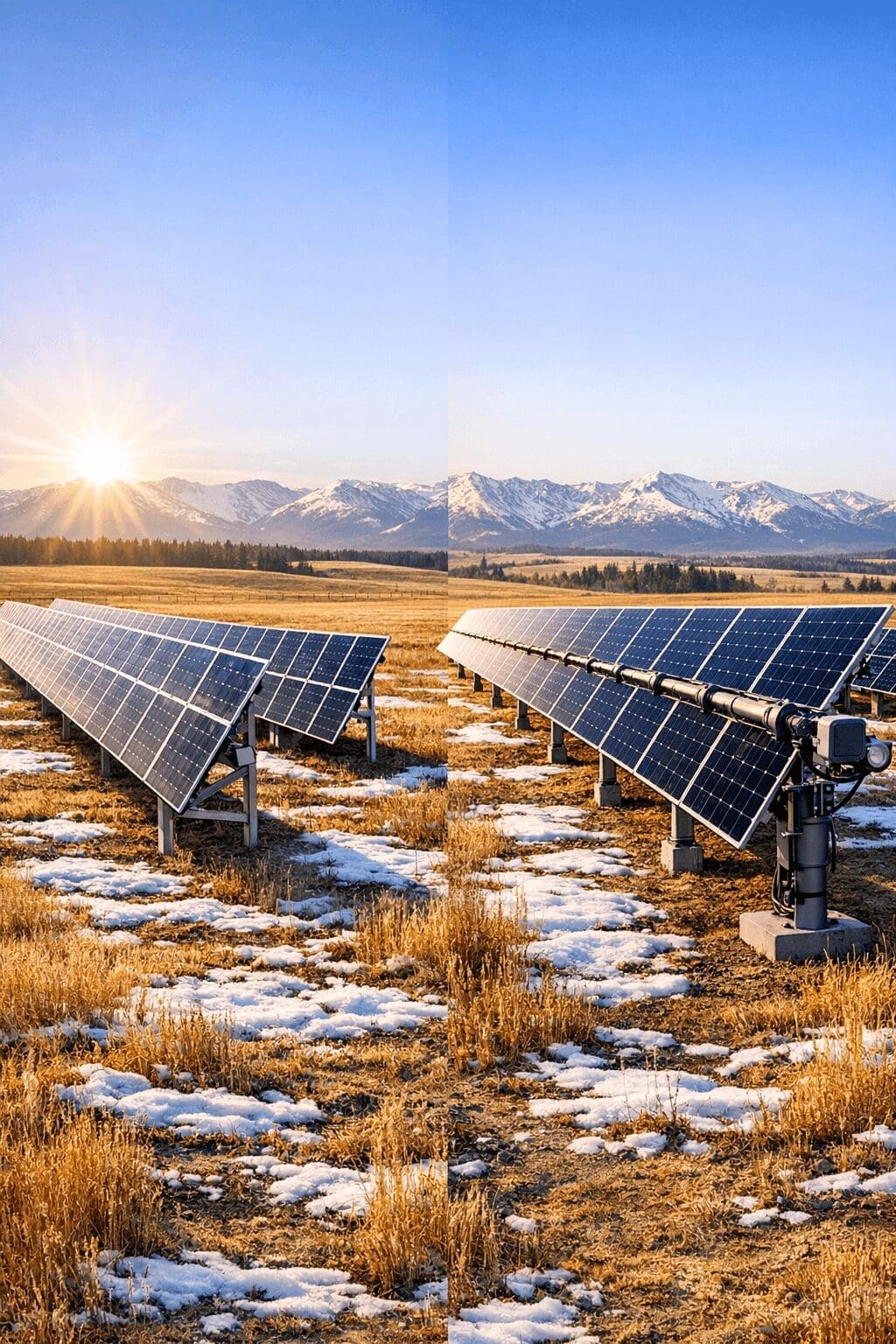
Hyper‑realistic image showing fixed‑tilt and single‑axis tracker solar panels in a snowy Canadian prairie landscape.

Based in Calgary, Alberta and Proudly Canadian • Don’t Get Burned When You Get Solar • Based in Calgary, Alberta and Proudly Canadian • Don’t Get Burned When You Get Solar • Based in Calgary, Alberta and Proudly Canadian • Don’t Get Burned When You Get Solar • Based in Calgary, Alberta and Proudly Canadian • Don’t Get Burned When You Get Solar • Based in Calgary, Alberta and Proudly Canadian • Don’t Get Burned When You Get Solar • Based in Calgary, Alberta and Proudly Canadian • Don’t Get Burned When You Get Solar • Based in Calgary, Alberta and Proudly Canadian • Don’t Get Burned When You Get Solar • Based in Calgary, Alberta and Proudly Canadian • Don’t Get Burned When You Get Solar • Based in Calgary, Alberta and Proudly Canadian • Don’t Get Burned When You Get Solar • Based in Calgary, Alberta and Proudly Canadian • Don’t Get Burned When You Get Solar • Based in Calgary, Alberta and Proudly Canadian • Don’t Get Burned When You Get Solar • Based in Calgary, Alberta and Proudly Canadian • Don’t Get Burned When You Get Solar •    

Based in Calgary, Alberta and Proudly Canadian • Don’t Get Burned When You Get Solar • Based in Calgary, Alberta and Proudly Canadian • Don’t Get Burned When You Get Solar • Based in Calgary, Alberta and Proudly Canadian • Don’t Get Burned When You Get Solar • Based in Calgary, Alberta and Proudly Canadian • Don’t Get Burned When You Get Solar • Based in Calgary, Alberta and Proudly Canadian • Don’t Get Burned When You Get Solar • Based in Calgary, Alberta and Proudly Canadian • Don’t Get Burned When You Get Solar • Based in Calgary, Alberta and Proudly Canadian • Don’t Get Burned When You Get Solar • Based in Calgary, Alberta and Proudly Canadian • Don’t Get Burned When You Get Solar • Based in Calgary, Alberta and Proudly Canadian • Don’t Get Burned When You Get Solar • Based in Calgary, Alberta and Proudly Canadian • Don’t Get Burned When You Get Solar • Based in Calgary, Alberta and Proudly Canadian • Don’t Get Burned When You Get Solar • Based in Calgary, Alberta and Proudly Canadian • Don’t Get Burned When You Get Solar •    

Based in Calgary, Alberta and Proudly Canadian • Don’t Get Burned When You Get Solar • Based in Calgary, Alberta and Proudly Canadian • Don’t Get Burned When You Get Solar • Based in Calgary, Alberta and Proudly Canadian • Don’t Get Burned When You Get Solar • Based in Calgary, Alberta and Proudly Canadian • Don’t Get Burned When You Get Solar • Based in Calgary, Alberta and Proudly Canadian • Don’t Get Burned When You Get Solar • Based in Calgary, Alberta and Proudly Canadian • Don’t Get Burned When You Get Solar • Based in Calgary, Alberta and Proudly Canadian • Don’t Get Burned When You Get Solar • Based in Calgary, Alberta and Proudly Canadian • Don’t Get Burned When You Get Solar • Based in Calgary, Alberta and Proudly Canadian • Don’t Get Burned When You Get Solar • Based in Calgary, Alberta and Proudly Canadian • Don’t Get Burned When You Get Solar • Based in Calgary, Alberta and Proudly Canadian • Don’t Get Burned When You Get Solar • Based in Calgary, Alberta and Proudly Canadian • Don’t Get Burned When You Get Solar •    

Based in Calgary, Alberta and Proudly Canadian • Don’t Get Burned When You Get Solar • Based in Calgary, Alberta and Proudly Canadian • Don’t Get Burned When You Get Solar • Based in Calgary, Alberta and Proudly Canadian • Don’t Get Burned When You Get Solar • Based in Calgary, Alberta and Proudly Canadian • Don’t Get Burned When You Get Solar • Based in Calgary, Alberta and Proudly Canadian • Don’t Get Burned When You Get Solar • Based in Calgary, Alberta and Proudly Canadian • Don’t Get Burned When You Get Solar • Based in Calgary, Alberta and Proudly Canadian • Don’t Get Burned When You Get Solar • Based in Calgary, Alberta and Proudly Canadian • Don’t Get Burned When You Get Solar • Based in Calgary, Alberta and Proudly Canadian • Don’t Get Burned When You Get Solar • Based in Calgary, Alberta and Proudly Canadian • Don’t Get Burned When You Get Solar • Based in Calgary, Alberta and Proudly Canadian • Don’t Get Burned When You Get Solar • Based in Calgary, Alberta and Proudly Canadian • Don’t Get Burned When You Get Solar •    

Based in Calgary, Alberta and Proudly Canadian • Don’t Get Burned When You Get Solar • Based in Calgary, Alberta and Proudly Canadian • Don’t Get Burned When You Get Solar • Based in Calgary, Alberta and Proudly Canadian • Don’t Get Burned When You Get Solar • Based in Calgary, Alberta and Proudly Canadian • Don’t Get Burned When You Get Solar • Based in Calgary, Alberta and Proudly Canadian • Don’t Get Burned When You Get Solar • Based in Calgary, Alberta and Proudly Canadian • Don’t Get Burned When You Get Solar • Based in Calgary, Alberta and Proudly Canadian • Don’t Get Burned When You Get Solar • Based in Calgary, Alberta and Proudly Canadian • Don’t Get Burned When You Get Solar • Based in Calgary, Alberta and Proudly Canadian • Don’t Get Burned When You Get Solar • Based in Calgary, Alberta and Proudly Canadian • Don’t Get Burned When You Get Solar • Based in Calgary, Alberta and Proudly Canadian • Don’t Get Burned When You Get Solar • Based in Calgary, Alberta and Proudly Canadian • Don’t Get Burned When You Get Solar •    

Based in Calgary, Alberta and Proudly Canadian • Don’t Get Burned When You Get Solar • Based in Calgary, Alberta and Proudly Canadian • Don’t Get Burned When You Get Solar • Based in Calgary, Alberta and Proudly Canadian • Don’t Get Burned When You Get Solar • Based in Calgary, Alberta and Proudly Canadian • Don’t Get Burned When You Get Solar • Based in Calgary, Alberta and Proudly Canadian • Don’t Get Burned When You Get Solar • Based in Calgary, Alberta and Proudly Canadian • Don’t Get Burned When You Get Solar • Based in Calgary, Alberta and Proudly Canadian • Don’t Get Burned When You Get Solar • Based in Calgary, Alberta and Proudly Canadian • Don’t Get Burned When You Get Solar • Based in Calgary, Alberta and Proudly Canadian • Don’t Get Burned When You Get Solar • Based in Calgary, Alberta and Proudly Canadian • Don’t Get Burned When You Get Solar • Based in Calgary, Alberta and Proudly Canadian • Don’t Get Burned When You Get Solar • Based in Calgary, Alberta and Proudly Canadian • Don’t Get Burned When You Get Solar •    

Based in Calgary, Alberta and Proudly Canadian • Don’t Get Burned When You Get Solar • Based in Calgary, Alberta and Proudly Canadian • Don’t Get Burned When You Get Solar • Based in Calgary, Alberta and Proudly Canadian • Don’t Get Burned When You Get Solar • Based in Calgary, Alberta and Proudly Canadian • Don’t Get Burned When You Get Solar • Based in Calgary, Alberta and Proudly Canadian • Don’t Get Burned When You Get Solar • Based in Calgary, Alberta and Proudly Canadian • Don’t Get Burned When You Get Solar • Based in Calgary, Alberta and Proudly Canadian • Don’t Get Burned When You Get Solar • Based in Calgary, Alberta and Proudly Canadian • Don’t Get Burned When You Get Solar • Based in Calgary, Alberta and Proudly Canadian • Don’t Get Burned When You Get Solar • Based in Calgary, Alberta and Proudly Canadian • Don’t Get Burned When You Get Solar • Based in Calgary, Alberta and Proudly Canadian • Don’t Get Burned When You Get Solar • Based in Calgary, Alberta and Proudly Canadian • Don’t Get Burned When You Get Solar •    

Based in Calgary, Alberta and Proudly Canadian • Don’t Get Burned When You Get Solar • Based in Calgary, Alberta and Proudly Canadian • Don’t Get Burned When You Get Solar • Based in Calgary, Alberta and Proudly Canadian • Don’t Get Burned When You Get Solar • Based in Calgary, Alberta and Proudly Canadian • Don’t Get Burned When You Get Solar • Based in Calgary, Alberta and Proudly Canadian • Don’t Get Burned When You Get Solar • Based in Calgary, Alberta and Proudly Canadian • Don’t Get Burned When You Get Solar • Based in Calgary, Alberta and Proudly Canadian • Don’t Get Burned When You Get Solar • Based in Calgary, Alberta and Proudly Canadian • Don’t Get Burned When You Get Solar • Based in Calgary, Alberta and Proudly Canadian • Don’t Get Burned When You Get Solar • Based in Calgary, Alberta and Proudly Canadian • Don’t Get Burned When You Get Solar • Based in Calgary, Alberta and Proudly Canadian • Don’t Get Burned When You Get Solar • Based in Calgary, Alberta and Proudly Canadian • Don’t Get Burned When You Get Solar •    

Based in Calgary, Alberta and Proudly Canadian • Don’t Get Burned When You Get Solar • Based in Calgary, Alberta and Proudly Canadian • Don’t Get Burned When You Get Solar • Based in Calgary, Alberta and Proudly Canadian • Don’t Get Burned When You Get Solar • Based in Calgary, Alberta and Proudly Canadian • Don’t Get Burned When You Get Solar • Based in Calgary, Alberta and Proudly Canadian • Don’t Get Burned When You Get Solar • Based in Calgary, Alberta and Proudly Canadian • Don’t Get Burned When You Get Solar • Based in Calgary, Alberta and Proudly Canadian • Don’t Get Burned When You Get Solar • Based in Calgary, Alberta and Proudly Canadian • Don’t Get Burned When You Get Solar • Based in Calgary, Alberta and Proudly Canadian • Don’t Get Burned When You Get Solar • Based in Calgary, Alberta and Proudly Canadian • Don’t Get Burned When You Get Solar • Based in Calgary, Alberta and Proudly Canadian • Don’t Get Burned When You Get Solar • Based in Calgary, Alberta and Proudly Canadian • Don’t Get Burned When You Get Solar •    

Based in Calgary, Alberta and Proudly Canadian • Don’t Get Burned When You Get Solar • Based in Calgary, Alberta and Proudly Canadian • Don’t Get Burned When You Get Solar • Based in Calgary, Alberta and Proudly Canadian • Don’t Get Burned When You Get Solar • Based in Calgary, Alberta and Proudly Canadian • Don’t Get Burned When You Get Solar • Based in Calgary, Alberta and Proudly Canadian • Don’t Get Burned When You Get Solar • Based in Calgary, Alberta and Proudly Canadian • Don’t Get Burned When You Get Solar • Based in Calgary, Alberta and Proudly Canadian • Don’t Get Burned When You Get Solar • Based in Calgary, Alberta and Proudly Canadian • Don’t Get Burned When You Get Solar • Based in Calgary, Alberta and Proudly Canadian • Don’t Get Burned When You Get Solar • Based in Calgary, Alberta and Proudly Canadian • Don’t Get Burned When You Get Solar • Based in Calgary, Alberta and Proudly Canadian • Don’t Get Burned When You Get Solar • Based in Calgary, Alberta and Proudly Canadian • Don’t Get Burned When You Get Solar •    

Feel secure when you switch to
solar.

When You Work with greenkey

you get:

A no-pressure analysis of your home's solar potential.

A free strategy session to help you decide if GreenKey is right for you.

A dedicated, knowledgeable Project Consultant with industry experience.

A robust current and future energy needs assessment.

Quotes from our network of trusted, licensed contractors.

An expert analysis of your quotes, using GreenKey's proprietary modeling tool.

A full side-by-side comparison chart with normalized data.

An expert recommendation based on your longterm needs and goals.

A live session with your Project Consultant to discuss financing options.

An information session to help you understand how Solar Club works.

Based in Calgary, Alberta and Proudly Canadian • Don’t Get Burned When You Get Solar • Based in Calgary, Alberta and Proudly Canadian • Don’t Get Burned When You Get Solar • Based in Calgary, Alberta and Proudly Canadian • Don’t Get Burned When You Get Solar • Based in Calgary, Alberta and Proudly Canadian • Don’t Get Burned When You Get Solar • Based in Calgary, Alberta and Proudly Canadian • Don’t Get Burned When You Get Solar • Based in Calgary, Alberta and Proudly Canadian • Don’t Get Burned When You Get Solar • Based in Calgary, Alberta and Proudly Canadian • Don’t Get Burned When You Get Solar • Based in Calgary, Alberta and Proudly Canadian • Don’t Get Burned When You Get Solar • Based in Calgary, Alberta and Proudly Canadian • Don’t Get Burned When You Get Solar • Based in Calgary, Alberta and Proudly Canadian • Don’t Get Burned When You Get Solar • Based in Calgary, Alberta and Proudly Canadian • Don’t Get Burned When You Get Solar • Based in Calgary, Alberta and Proudly Canadian • Don’t Get Burned When You Get Solar •    

Based in Calgary, Alberta and Proudly Canadian • Don’t Get Burned When You Get Solar • Based in Calgary, Alberta and Proudly Canadian • Don’t Get Burned When You Get Solar • Based in Calgary, Alberta and Proudly Canadian • Don’t Get Burned When You Get Solar • Based in Calgary, Alberta and Proudly Canadian • Don’t Get Burned When You Get Solar • Based in Calgary, Alberta and Proudly Canadian • Don’t Get Burned When You Get Solar • Based in Calgary, Alberta and Proudly Canadian • Don’t Get Burned When You Get Solar • Based in Calgary, Alberta and Proudly Canadian • Don’t Get Burned When You Get Solar • Based in Calgary, Alberta and Proudly Canadian • Don’t Get Burned When You Get Solar • Based in Calgary, Alberta and Proudly Canadian • Don’t Get Burned When You Get Solar • Based in Calgary, Alberta and Proudly Canadian • Don’t Get Burned When You Get Solar • Based in Calgary, Alberta and Proudly Canadian • Don’t Get Burned When You Get Solar • Based in Calgary, Alberta and Proudly Canadian • Don’t Get Burned When You Get Solar •    

Based in Calgary, Alberta and Proudly Canadian • Don’t Get Burned When You Get Solar • Based in Calgary, Alberta and Proudly Canadian • Don’t Get Burned When You Get Solar • Based in Calgary, Alberta and Proudly Canadian • Don’t Get Burned When You Get Solar • Based in Calgary, Alberta and Proudly Canadian • Don’t Get Burned When You Get Solar • Based in Calgary, Alberta and Proudly Canadian • Don’t Get Burned When You Get Solar • Based in Calgary, Alberta and Proudly Canadian • Don’t Get Burned When You Get Solar • Based in Calgary, Alberta and Proudly Canadian • Don’t Get Burned When You Get Solar • Based in Calgary, Alberta and Proudly Canadian • Don’t Get Burned When You Get Solar • Based in Calgary, Alberta and Proudly Canadian • Don’t Get Burned When You Get Solar • Based in Calgary, Alberta and Proudly Canadian • Don’t Get Burned When You Get Solar • Based in Calgary, Alberta and Proudly Canadian • Don’t Get Burned When You Get Solar • Based in Calgary, Alberta and Proudly Canadian • Don’t Get Burned When You Get Solar •    

Based in Calgary, Alberta and Proudly Canadian • Don’t Get Burned When You Get Solar • Based in Calgary, Alberta and Proudly Canadian • Don’t Get Burned When You Get Solar • Based in Calgary, Alberta and Proudly Canadian • Don’t Get Burned When You Get Solar • Based in Calgary, Alberta and Proudly Canadian • Don’t Get Burned When You Get Solar • Based in Calgary, Alberta and Proudly Canadian • Don’t Get Burned When You Get Solar • Based in Calgary, Alberta and Proudly Canadian • Don’t Get Burned When You Get Solar • Based in Calgary, Alberta and Proudly Canadian • Don’t Get Burned When You Get Solar • Based in Calgary, Alberta and Proudly Canadian • Don’t Get Burned When You Get Solar • Based in Calgary, Alberta and Proudly Canadian • Don’t Get Burned When You Get Solar • Based in Calgary, Alberta and Proudly Canadian • Don’t Get Burned When You Get Solar • Based in Calgary, Alberta and Proudly Canadian • Don’t Get Burned When You Get Solar • Based in Calgary, Alberta and Proudly Canadian • Don’t Get Burned When You Get Solar •    

Based in Calgary, Alberta and Proudly Canadian • Don’t Get Burned When You Get Solar • Based in Calgary, Alberta and Proudly Canadian • Don’t Get Burned When You Get Solar • Based in Calgary, Alberta and Proudly Canadian • Don’t Get Burned When You Get Solar • Based in Calgary, Alberta and Proudly Canadian • Don’t Get Burned When You Get Solar • Based in Calgary, Alberta and Proudly Canadian • Don’t Get Burned When You Get Solar • Based in Calgary, Alberta and Proudly Canadian • Don’t Get Burned When You Get Solar • Based in Calgary, Alberta and Proudly Canadian • Don’t Get Burned When You Get Solar • Based in Calgary, Alberta and Proudly Canadian • Don’t Get Burned When You Get Solar • Based in Calgary, Alberta and Proudly Canadian • Don’t Get Burned When You Get Solar • Based in Calgary, Alberta and Proudly Canadian • Don’t Get Burned When You Get Solar • Based in Calgary, Alberta and Proudly Canadian • Don’t Get Burned When You Get Solar • Based in Calgary, Alberta and Proudly Canadian • Don’t Get Burned When You Get Solar •    

Based in Calgary, Alberta and Proudly Canadian • Don’t Get Burned When You Get Solar • Based in Calgary, Alberta and Proudly Canadian • Don’t Get Burned When You Get Solar • Based in Calgary, Alberta and Proudly Canadian • Don’t Get Burned When You Get Solar • Based in Calgary, Alberta and Proudly Canadian • Don’t Get Burned When You Get Solar • Based in Calgary, Alberta and Proudly Canadian • Don’t Get Burned When You Get Solar • Based in Calgary, Alberta and Proudly Canadian • Don’t Get Burned When You Get Solar • Based in Calgary, Alberta and Proudly Canadian • Don’t Get Burned When You Get Solar • Based in Calgary, Alberta and Proudly Canadian • Don’t Get Burned When You Get Solar • Based in Calgary, Alberta and Proudly Canadian • Don’t Get Burned When You Get Solar • Based in Calgary, Alberta and Proudly Canadian • Don’t Get Burned When You Get Solar • Based in Calgary, Alberta and Proudly Canadian • Don’t Get Burned When You Get Solar • Based in Calgary, Alberta and Proudly Canadian • Don’t Get Burned When You Get Solar •    

Based in Calgary, Alberta and Proudly Canadian • Don’t Get Burned When You Get Solar • Based in Calgary, Alberta and Proudly Canadian • Don’t Get Burned When You Get Solar • Based in Calgary, Alberta and Proudly Canadian • Don’t Get Burned When You Get Solar • Based in Calgary, Alberta and Proudly Canadian • Don’t Get Burned When You Get Solar • Based in Calgary, Alberta and Proudly Canadian • Don’t Get Burned When You Get Solar • Based in Calgary, Alberta and Proudly Canadian • Don’t Get Burned When You Get Solar • Based in Calgary, Alberta and Proudly Canadian • Don’t Get Burned When You Get Solar • Based in Calgary, Alberta and Proudly Canadian • Don’t Get Burned When You Get Solar • Based in Calgary, Alberta and Proudly Canadian • Don’t Get Burned When You Get Solar • Based in Calgary, Alberta and Proudly Canadian • Don’t Get Burned When You Get Solar • Based in Calgary, Alberta and Proudly Canadian • Don’t Get Burned When You Get Solar • Based in Calgary, Alberta and Proudly Canadian • Don’t Get Burned When You Get Solar •    

Based in Calgary, Alberta and Proudly Canadian • Don’t Get Burned When You Get Solar • Based in Calgary, Alberta and Proudly Canadian • Don’t Get Burned When You Get Solar • Based in Calgary, Alberta and Proudly Canadian • Don’t Get Burned When You Get Solar • Based in Calgary, Alberta and Proudly Canadian • Don’t Get Burned When You Get Solar • Based in Calgary, Alberta and Proudly Canadian • Don’t Get Burned When You Get Solar • Based in Calgary, Alberta and Proudly Canadian • Don’t Get Burned When You Get Solar • Based in Calgary, Alberta and Proudly Canadian • Don’t Get Burned When You Get Solar • Based in Calgary, Alberta and Proudly Canadian • Don’t Get Burned When You Get Solar • Based in Calgary, Alberta and Proudly Canadian • Don’t Get Burned When You Get Solar • Based in Calgary, Alberta and Proudly Canadian • Don’t Get Burned When You Get Solar • Based in Calgary, Alberta and Proudly Canadian • Don’t Get Burned When You Get Solar • Based in Calgary, Alberta and Proudly Canadian • Don’t Get Burned When You Get Solar •    

Based in Calgary, Alberta and Proudly Canadian • Don’t Get Burned When You Get Solar • Based in Calgary, Alberta and Proudly Canadian • Don’t Get Burned When You Get Solar • Based in Calgary, Alberta and Proudly Canadian • Don’t Get Burned When You Get Solar • Based in Calgary, Alberta and Proudly Canadian • Don’t Get Burned When You Get Solar • Based in Calgary, Alberta and Proudly Canadian • Don’t Get Burned When You Get Solar • Based in Calgary, Alberta and Proudly Canadian • Don’t Get Burned When You Get Solar • Based in Calgary, Alberta and Proudly Canadian • Don’t Get Burned When You Get Solar • Based in Calgary, Alberta and Proudly Canadian • Don’t Get Burned When You Get Solar • Based in Calgary, Alberta and Proudly Canadian • Don’t Get Burned When You Get Solar • Based in Calgary, Alberta and Proudly Canadian • Don’t Get Burned When You Get Solar • Based in Calgary, Alberta and Proudly Canadian • Don’t Get Burned When You Get Solar • Based in Calgary, Alberta and Proudly Canadian • Don’t Get Burned When You Get Solar •    

Based in Calgary, Alberta and Proudly Canadian • Don’t Get Burned When You Get Solar • Based in Calgary, Alberta and Proudly Canadian • Don’t Get Burned When You Get Solar • Based in Calgary, Alberta and Proudly Canadian • Don’t Get Burned When You Get Solar • Based in Calgary, Alberta and Proudly Canadian • Don’t Get Burned When You Get Solar • Based in Calgary, Alberta and Proudly Canadian • Don’t Get Burned When You Get Solar • Based in Calgary, Alberta and Proudly Canadian • Don’t Get Burned When You Get Solar • Based in Calgary, Alberta and Proudly Canadian • Don’t Get Burned When You Get Solar • Based in Calgary, Alberta and Proudly Canadian • Don’t Get Burned When You Get Solar • Based in Calgary, Alberta and Proudly Canadian • Don’t Get Burned When You Get Solar • Based in Calgary, Alberta and Proudly Canadian • Don’t Get Burned When You Get Solar • Based in Calgary, Alberta and Proudly Canadian • Don’t Get Burned When You Get Solar • Based in Calgary, Alberta and Proudly Canadian • Don’t Get Burned When You Get Solar •    

introducing Our ceo & co-founder

Luke Killam

Our CEO, Luke Killam, is a respected senior energy professional with over 20 years of global experience in operations, strategy, and renewable development. Drawing on his industry expertise and analytical mindset, Luke and his team help homeowners, real estate developers, businesses, communities, and governments save money and create a secure energy future. With a background in business statistics and a global executive MBA from TRIUM (NYU Stern, London School of Economics, and HEC Paris), Luke is committed to helping Canadians own their energy and grow their green.

spend money
on life

not electricity

here at greenkey, we have one simple goal:

help canadian families spend less money on electricity.

yep, that's right; we get that there's a lot to worry about in the world, but...

We're here because we want
your family to have the money you need
to live your best lives.

We're here because we want your family
to have the
money you need to
live your best lives.

and we just have one question for you:

do you think electricity
prices are                 going to:

do you think electricity prices are


 going to:

so we just have one question for you:

Go down

most likely

Electricity prices are going to go down.

Unlikely

While it’s great to hope for lower costs, national energy demands are rising, and infrastructure upgrades are needed to support increasing populations. Temporary dips may happen, but significant, long-term reductions are unlikely without substantial changes in technology or government policy to drive down production costs.


Electricity prices are going to stay about the same.

Unlikely

Electricity prices might seem stable in the short term, but underlying factors—like inflation, infrastructure maintenance, and new technology—make it unlikely that they'll remain unchanged for long. Even if prices hold steady for a while, long-term projections suggest gradual increases to the price of electricity due to rising populations and demand.

Electricity prices are going to go up.

Most likely

Electricity prices are expected to rise due to inflation and the costs associated with increasing populations and demand. Infrastructure upgrades, carbon pricing, and geopolitical factors are also likely to contribute to higher costs. Securing energy independence for your family could help buffer you from rising electricity costs in the future.

X go back

Here's how we're different

We don't accept kickbacks.

We give you full access to your data.

We provide ongoing support.

learn about our approach

plan for your future.book your free strategy session today.

Own your energy. grow your green.