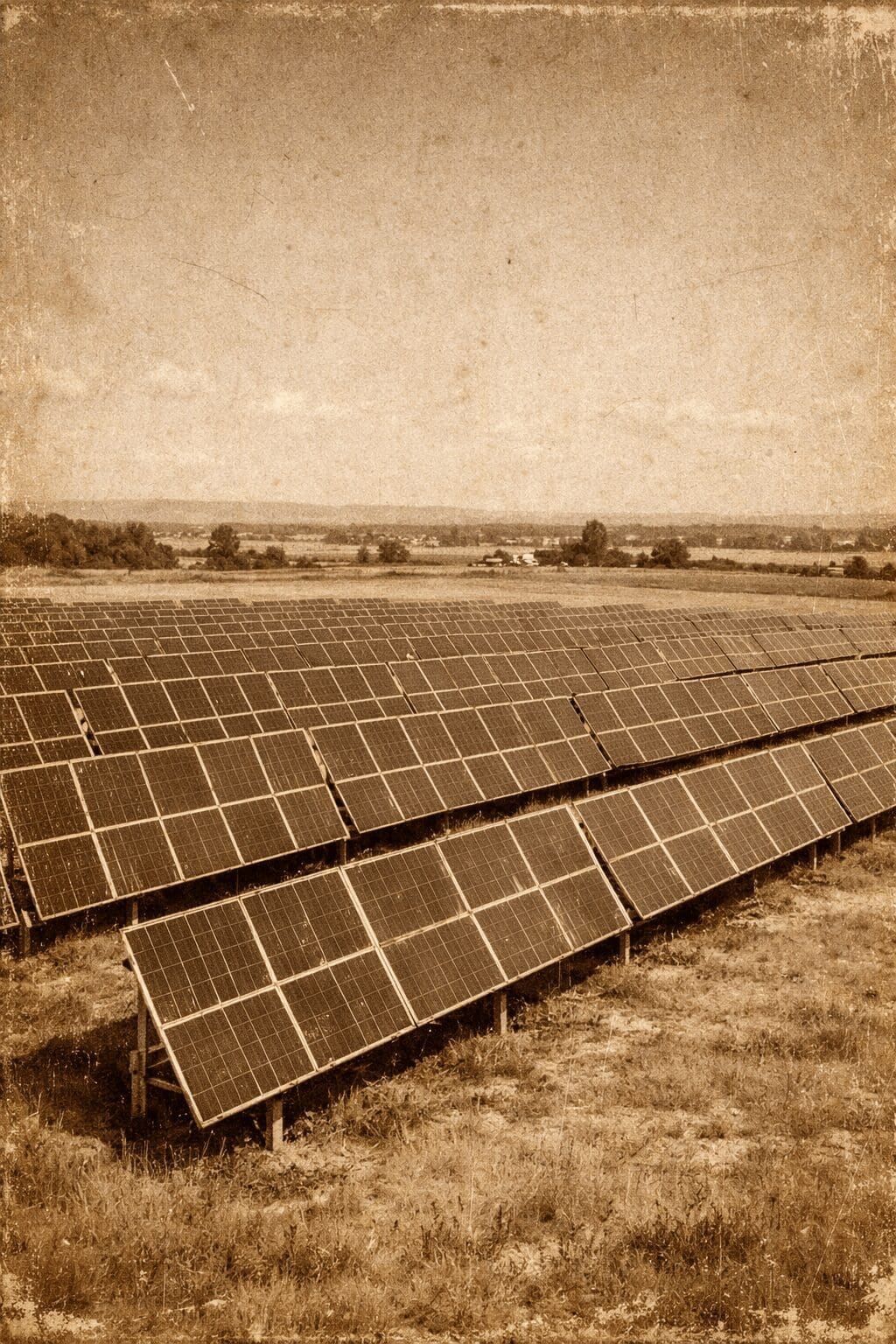
For years, a simple idea has shaped how people think about solar energy: solar panels last about 25 years, and then they’re done. That number shows up everywhere from manufacturer warranties to financial models, and it’s often interpreted as a hard expiration date. The implication is that once a panel or solar array hits year 25, it’s reached the end of its useful life.
But growing real-world evidence tells a very different story. A recent long-term study of operating solar installations found that many panels continue producing electricity well beyond their warranty period, often at surprisingly high performance levels decades later. In other words, the warranty simply marks the point beyond which manufacturers stop guaranteeing a specific output. In practice, solar panels age gradually, not catastrophically.
This week, we’re unpacking the gap between expectation and reality to explore what it means for solar deployment. We’ll look at what the 25-year figure actually means, why repowering has become a key strategy for extending system value, and how advances in PV technology, from monofacial to bifacial modules and emerging materials like perovskites, are reshaping assumptions about longevity. Together, these trends point to a future where solar is not just clean and cost-effective, but far longer-lived than many people assume.
The Myth of the 25-Year Life
The widespread belief that solar panels “die” after 25 years comes from how manufacturers structure their warranties. Most modern solar modules are sold with a 25–30 year performance warranty, which typically guarantees that the panel will still deliver around 80–85% of its original rated output by the end of that period.
This threshold is conservative by design and does not reflect the technical limitation of the panels themselves. Instead, it signals the level of long-term performance that manufacturers are confident they can contractually guarantee under a wide range of operating conditions.
What a Warranty Actually Covers
A performance warranty is fundamentally a financial and legal instrument, not a prediction of failure. It defines the manufacturer’s liability if a panel degrades faster than expected, but it does not describe the full lifespan of the asset.
Solar panels degrade gradually, typically losing a small fraction of output each year rather than failing suddenly. This degradation is driven by normal aging processes such as repeated thermal cycling, long-term exposure to ultraviolet radiation, humidity and moisture ingress, and slow changes in the electrical properties of cells, solder joints, and encapsulant materials. Over decades, these small annual losses accumulate in a predictable way, which is why manufacturers commonly guarantee at least 80% of original output after 25 years.
That figure reflects a conservative assumption about cumulative degradation across diverse climates and installations, providing a safety margin rather than a true limit on useful performance. This means that the warranty period marks the end of guaranteed performance, but not the end of performance itself. Many panels continue generating meaningful power well beyond 25 years.
Warranty ≠ End of Useful Energy
This distinction is critical. Solar panels do not suddenly shut off when their warranty expires. There is no built-in “end date.” As long as electrical components remain intact and degradation stays within acceptable limits, panels can continue to operate and generate value.
In many cases, panels are retired or replaced not because they have failed, but because newer technology offers higher efficiency, better land use, or improved economics. That decision is often about opportunity cost rather than about the panels reaching a true end of life.
Shifting Context: Real-World Data Changes the Narrative
As early solar installations reach their third and fourth decades of operation, the industry is finally able to evaluate long-term performance using measured, real-world data rather than projections. This has sparked renewed discussion around asset life, repowering strategies, and the environmental benefits of keeping panels in service longer.
These discussions consistently reinforce the same conclusion: the warranty period is a conservative benchmark, not a technical ceiling. Panels often outperform their original expectations, especially when they were well-manufactured and installed under reasonable operating conditions.
Evidence from Long-Term Studies
One of the strongest pieces of evidence comes from a Swiss study examining photovoltaic modules installed in the late 1980s. After more than 30 years of continuous operation, many of these panels were still producing over 80% of their original output, matching or exceeding what modern warranties promise after 25 years.
The implications are significant. If early-generation panels can perform this well after three decades, today’s modules that are built with improved materials, manufacturing processes, and quality controls, are likely to last even longer. The 25-year myth, it turns out, says far more about how warranties are written than about how long solar panels can truly last.
What Determines a Solar Panel’s Lifespan
A solar panel’s lifespan isn’t defined by a single number or date, but instead is shaped by how gradually its performance changes over time and by the conditions it operates in. Understanding these drivers helps explain why many panels outlast their original expectations.
Degradation Over Time
At the core of solar longevity is degradation rate, which refers to the annual percentage loss of power output a solar panel experiences as it ages. Rather than failing outright, panels slowly produce slightly less electricity each year due to material aging, thermal cycling, and environmental exposure.
Across the industry, typical degradation rates for modern crystalline silicon panels are often cited in the range of ~0.4–0.8% per year. At those rates, a panel would still be operating at roughly 80–90% of its original capacity after 25 years, which is well within the bounds of “useful” electricity production.
Importantly, these figures are often conservative. Long-term, real-world datasets, especially from older installations that have been operating for multiple decades, frequently show slower degradation than early models predicted. As measurement techniques and datasets have improved, the industry has gained confidence that many panels age more gradually than once assumed.
Factors That Affect Longevity
While degradation is inevitable, its pace varies widely depending on external and design-related factors.
Climate and temperature stress play a major role. Panels exposed to extreme heat, large temperature swings, high humidity, or corrosive environments (such as coastal or industrial areas) tend to degrade faster than those operating in more moderate conditions. Thermal cycling in particular (i.e. daily heating and cooling) can strain internal connections over time.
Mounting and shading conditions also matter. Poor ventilation can trap heat behind modules, accelerating degradation, while partial shading can cause electrical stress that reduces long-term performance. Well-designed mounting systems that allow airflow and minimize shading help panels operate closer to their ideal conditions year after year.
Finally, materials and manufacturing quality are critical determinants of lifespan. The durability of the encapsulant, backsheet, and glass directly affects how well a panel resists moisture ingress, UV exposure, and mechanical stress. Improvements in these materials over the last two decades are a key reason why modern panels are expected to outperform earlier generations in terms of longevity.
Together, degradation rates and operating conditions explain why solar panel lifespan is best understood as a spectrum, rather than a fixed endpoint, and why many systems continue delivering value long after their warranties expire.
Mono-facial vs Bi-facial Panels
When evaluating solar panel options, one key distinction that affects both energy yield and longevity is whether a module is monofacial or bifacial.
Monofacial panels are the most common type of solar module and capture sunlight only on the front side. All energy generation comes from light that directly hits the face of the panel, which makes them simple and reliable for most rooftop and ground-mounted installations.
Bifacial panels, by contrast, capture sunlight from both the front and the back. The rear side absorbs reflected or diffused light from the ground or surrounding surfaces, known as albedo, which increases total energy production. This design often includes dual-glass construction, which provides additional durability.
Performance & Longevity
Bifacial panels can deliver higher overall power output than monofacial modules under the right conditions because they make use of additional light from behind the panel.
The dual-glass design common in bifacial modules can also reduce degradation over time, as it eliminates some of the weaknesses associated with traditional backsheets, such as cracking or moisture ingress. Some manufacturers even offer longer warranties of up to 30 years for bifacial panels, rather than the typical 25-year warranty for monofacial panels.
Practical Considerations
The performance gains of bifacial panels depend heavily on installation conditions, including surface reflectivity and panel height above the ground. In low-reflectivity environments or tightly spaced rooftop arrays, bifacial modules may offer only marginal improvement over monofacial panels.
Monofacial panels remain a strong choice for standard rooftops or areas with limited reflective surfaces. They are cost-effective, proven, and continue to deliver reliable performance across a wide range of applications.
Bifacial technology shines when the installation can take advantage of reflected light, such as on light-colored rooftops, snow-covered landscapes, or elevated ground-mounted arrays, offering both higher energy yield and potentially longer system lifespan.
Repowering: Breathing New Life into Solar System
Repowering refers to updating older solar installations to improve performance, extend operational life, or maximize economic returns. Rather than replacing an entire system, repowering focuses on renewing or upgrading the components that limit efficiency or reliability. The key insight is that solar panels themselves rarely “expire”, but other system elements, or evolving technology and economics, can make an upgrade worthwhile.
Common Repowering Strategies
- Replacing Inverters: Inverters often fail before the panels themselves. Updating inverters to modern, more efficient models can restore system output and reduce downtime.
- Swapping Old Modules: Older panels can be replaced with newer, higher-efficiency modules. This increases energy generation per square meter, making better use of available space.
- Upgrading Balance-of-System Components: Repowering can also involve rewiring, replacing racking, or improving connections. These upgrades reduce losses and improve long-term reliability.
Why Repowering Matters
The central idea behind repowering is simple: while panels can keep producing electricity for decades, other system components or economic considerations may limit a system’s performance or profitability. By strategically upgrading parts of the installation, owners can extend system life, boost energy yield, and increase financial returns—all without discarding perfectly functional panels.
Repowering illustrates that solar energy is not a single-use technology; it’s a long-term investment that can evolve and improve over time.
Advancements in PV Technology That Impact Longevity
Technological progress in photovoltaics is multifaceted, aiming for higher efficiency, durability, thermal stability, and lifetime energy yield. New cell architectures and emerging materials are reshaping expectations for how long solar panels can reliably perform in the field.
Improved Silicon Cell Architectures
Modern silicon technologies such as TOPCon (Tunnel Oxide Passivated Contact) and HJT (Heterojunction Technology) represent a significant evolution from earlier cell designs. These architectures reduce internal electrical losses and improve how cells handle heat, which directly impacts long-term performance.
By lowering recombination losses and improving passivation, these next-generation silicon cells tend to degrade more slowly than older designs. Improved heat tolerance also helps panels maintain output in warmer climates, where thermal stress has traditionally accelerated aging. The result is silicon-based modules that are not only more efficient on day one, but better suited for multi-decade operation.
Perovskite and Tandem Solar Cells
Beyond silicon, perovskite solar cells and perovskite-on-silicon tandem cells are among the most promising emerging technologies in the PV space. These cells can be lighter and significantly more efficient, especially when layered on top of traditional silicon to capture a broader range of the solar spectrum.
However, longevity has historically been the main challenge for perovskites. Early versions degraded much faster than silicon when exposed to moisture, heat, or UV radiation. That said, research progress has been rapid. New encapsulation techniques, material formulations, and device structures have dramatically improved stability, with some recent perovskite designs demonstrating durability approaching silicon benchmarks in controlled testing.
While perovskite technology is not yet as field-proven as silicon, its trajectory suggests that future modules could combine very high efficiency with acceptable multi-decade lifetimes.
How These Advances Change the Long-Term Picture
Together, these advancements point to a future where solar panels deliver more energy over longer periods, reducing the need for frequent replacements and lowering lifecycle costs and emissions. Higher efficiency means more power from the same footprint, while improved durability increases total lifetime energy yield.
At the same time, the arrival of new technologies doesn’t diminish the value of existing installations. Even as PV technology continues to evolve, today’s panels, especially those already outperforming their warranties, can continue producing meaningful amounts of clean electricity long after their guaranteed window has passed. In that sense, innovation strengthens the case for solar longevity rather than undermining it.
What Research Shows About Longevity
As solar energy matures, one of the most valuable assets the industry has gained is time. Once scarce long-term outdoor performance data is now emerging from installations that have been operating for 20, 30, and even 40 years. This data consistently shows that many solar panels degrade more slowly than earlier models and projections suggested.
In practice, real-world performance often outperforms conservative warranty assumptions. Panels frequently maintain higher output levels for longer than manufacturers are contractually required to guarantee. This gap exists because warranties are intentionally cautious, designed to cover worst-case scenarios across diverse climates and operating conditions rather than typical performance.
While truly long datasets are still relatively rare, they are incredibly powerful. They allow researchers and asset owners to move beyond lab testing and short-term projections, providing a clearer picture of how panels age under real environmental stressors. As more long-lived systems are studied, confidence continues to grow that well-made solar panels are long-term infrastructure assets, not short-lived equipment.
Conclusion
The solar industry has long been shaped by conservative assumptions, but emerging real-world evidence is rewriting the narrative on longevity. Studies of decades-old installations, such as the recent SUPSI analysis of Swiss systems from the late 1980s and early 1990s, reveal exceptionally low annual degradation rates of just 0.16–0.24%, with many panels retaining over 80% of their original output after more than 30 years.
Modern crystalline silicon modules, benefiting from superior materials, manufacturing precision, and designs like dual-glass bifacial configurations, are poised to perform even better, often exhibiting median degradation rates around 0.4–0.6% per year in large-scale field data. Premium panels frequently achieve rates as low as 0.25–0.4%, meaning they can deliver 85–93% of initial capacity well beyond the 25-year warranty horizon.
This extended performance underscores that solar panels are durable, long-term infrastructure assets rather than disposable equipment. While factors like extreme climates, poor installation practices, or lower-quality components can accelerate degradation in some cases (with outliers showing higher rates), the overall trend points to gradual, predictable aging that allows systems to generate meaningful clean energy for 30–40 years or more. Repowering strategies further amplify value by refreshing inverters, upgrading modules, or optimizing balance-of-system components, turning aging arrays into high-performing assets without full replacement.
Looking ahead, innovations in cell architectures (TOPCon, HJT), bifacial designs, and emerging perovskites promise even higher efficiencies and greater resilience, potentially pushing practical lifespans further while reducing lifecycle costs and environmental impact. As more long-term datasets accumulate, the 25-year “myth” will continue to fade, replaced by a clearer understanding that solar assets are built to endure.
In the end, solar’s true strength lies not in a fixed expiration date, but in its ability to deliver clean, reliable power that outlasts expectations and accelerates the transition to a sustainable energy future.