blog menu

Close X

Blog Categories

Start here

Solar Makes Cents: How Rooftop Solar Can Save Canadian Families Money

read the post >

Clean Tech Investment Tax Credit: Your Shortcut to Lower Bills & Higher Profits

read the post >

Next post >

Energy Economics >

Reduce electricity bills, increase property value, and achieve strong financial returns while guarding against rising utility rates.

Emerging Energy Tech & Innovation >

Emerging Energy Tech >

Explore the latest in energy technology, smart energy management, AI optimization, and next-generation innovations.

Energy Market Insights >

Learn about macro-level industry trends, policy shifts, and energy market dynamics.

Energy Sovereignty & Independence >

Energy Sovereignty >

Reduce reliance on external and foreign energy, achieve energy stability, and gain control over your energy future. 

Close X

Blog Categories

Start here

Modern geothermal drilling rig silhouetted against a glowing orange sunset, representing deep‑earth heat and next‑generation clean energy.

Solar Makes Cents: How Rooftop Solar Can Save Canadian Families Money

read the post >

Modern geothermal drilling rig silhouetted against a glowing orange sunset, representing deep‑earth heat and next‑generation clean energy.

Clean Tech Investment Tax Credit: Your Shortcut to Lower Bills & Higher Profits

read the post >

< Prev Post

Clean Tech Investment Tax Credit: Your Shortcut to Lower Bills & Higher Profits

read the post >

Energy Economics >

Reduce electricity bills, increase property value, and achieve strong financial returns while guarding against rising utility rates.

Emerging Energy Tech & Innovation >

Emerging Energy Tech >

Explore the latest in energy technology, smart energy management, AI optimization, and next-generation innovations.

Energy Market Insights >

Learn about macro-level industry trends, policy shifts, and energy market dynamics.

Energy Sovereignty & Independence >

Energy Sovereignty >

Reduce reliance on external and foreign energy, achieve energy stability, and gain control over your energy future. 

Drill, Baby, Drill… Into Infinite Clean Energy

February 28, 2026

blog menu

Close X

Blog Categories

Start here

Next post >

Solar Makes Cents: How Rooftop Solar Can Save Canadian Families Money

read the post >

Clean Tech Investment Tax Credit: Your Shortcut to Lower Bills & Higher Profits

read the post >

Energy Economics >

Reduce electricity bills, increase property value, and achieve strong financial returns while guarding against rising utility rates.

Emerging Energy Tech & Innovation >

Emerging Energy Tech >

Explore the latest in energy technology, smart energy management, AI optimization, and next-generation innovations.

Energy Market Insights >

Learn about macro-level industry trends, policy shifts, and energy market dynamics.

Energy Sovereignty & Independence >

Energy Sovereignty >

Reduce reliance on external and foreign energy, achieve energy stability, and gain control over your energy future. 

Close X

Blog Categories

Start here

< Prev Post

Modern geothermal drilling rig silhouetted against a glowing orange sunset, representing deep‑earth heat and next‑generation clean energy.

Solar Makes Cents: How Rooftop Solar Can Save Canadian Families Money

read the post >

Modern geothermal drilling rig silhouetted against a glowing orange sunset, representing deep‑earth heat and next‑generation clean energy.

Clean Tech Investment Tax Credit: Your Shortcut to Lower Bills & Higher Profits

read the post >

Clean Tech Investment Tax Credit: Your Shortcut to Lower Bills & Higher Profits

read the post >

Energy Economics >

Reduce electricity bills, increase property value, and achieve strong financial returns while guarding against rising utility rates.

Emerging Energy Tech & Innovation >

Emerging Energy Tech >

Explore the latest in energy technology, smart energy management, AI optimization, and next-generation innovations.

Energy Market Insights >

Learn about macro-level industry trends, policy shifts, and energy market dynamics.

Energy Sovereignty & Independence >

Energy Sovereignty >

Reduce reliance on external and foreign energy, achieve energy stability, and gain control over your energy future. 

At GreenKey, our mission is to help Canadian families, businesses, and municipalities spend less money on electricity, so we can dedicate our resources to the things that really matter. We make sure you get the best deal on energy by providing unbiased expert analysis and professional project consulting for residential, commercial, and utility-scale projects.

Do less. Save more. Spend money on life, not electricity.

Own your energy. Grow your green.

GreenKey Homes for families & homeowners

GreenKey Consulting for developers

GreenKey Consulting for Businesses

GreenKey Consulting for Communities

Deep beneath our feet lies one of nature’s greatest untapped wonders: the Earth’s relentless, molten heat engine. For over 10,000 years, Indigenous peoples around the world have revered hot springs as sacred lifelines, using them to heal, cook, and warm entire communities. What began as cultural wisdom slowly evolved into engineering ambition.

In 1904, in the misty hills of Larderello, Italy, Prince Piero Ginori Conti tapped natural dry steam to spin a small turbine, producing the world’s first geothermal electricity. By 1913, that early experiment had evolved into the first commercial geothermal power plant, proving that the Earth’s internal heat could be harnessed to generate reliable electricity.

The 1980s brought binary-cycle technology, unlocking lower-temperature resources in places like California’s Imperial Valley. Decades of U.S. Department of Energy research advanced drilling and pioneered Enhanced Geothermal Systems (EGS), engineering reservoirs where nature fell short.

For decades, though, growth crawled. Conventional hydrothermal hotspots, which are rare and geographically limited, capped global installed capacity. By 1995, only 6 GW of geothermal electricity was being produced globally. 

Then came a seismic shift.

Horizontal drilling, high-temperature tools, fiber-optic monitoring, and hydraulic stimulation, techniques perfected during the shale boom, began unlocking “hot dry rock” in regions once thought off-limits. Developers could engineer geothermal reservoirs almost anywhere.

These are not small, incremental improvements. They are true game-changers, driving down costs, reducing project risk, and demonstrating that geothermal can scale far beyond traditional volcanic zones. As of 2025, global geothermal capacity has surpassed 17 GW and is poised to grow even faster.

The slogan “Drill, Baby, Drill” may have been forged in the fossil fuel era, but today it’s being reclaimed for something infinitely bigger: endless energy that could power the future without the climate cost.

Warm Hearted

We are fortunate to live on a temperate planet that is bathed in life sustaining energy from the sun. But deep beneath our feet lies an incredible hidden furnace that sustains life from within. Earth’s internal heat comes primarily from two sources:

1. Primordial heat – leftover energy from when Earth formed 4.5 billion years ago. Collisions between planetesimals and the sinking of dense iron to form the core released enormous heat that still slowly escapes to the surface.

2. Radiogenic heat – energy produced by the ongoing decay of radioactive elements like uranium-238, thorium-232, and potassium-40, concentrated in the crust and mantle. This contributes roughly half of the total internal heat.

There are smaller contributions from the latent heat of crystallization in the core and tidal friction from the Moon, but these are minor players.

Geothermal vs. Hydrothermal

Geothermal energy is one of the most reliable and underutilized renewable resources available today. At its core, it harnesses Earth’s internal heat to produce steam for electricity, district heating, and direct industrial use. 

But not all geothermal resources are created equal. Understanding the distinction between geothermal (the broad category) and hydrothermal (a specific subset) is key to understanding both the industry’s past and its future.

Geothermal

“Geothermal” comes from the Greek words geo (Earth) and therme (heat).

Temperatures at Earth’s core reach roughly 5,000–6,000°C, which is comparable to the surface of the Sun. That heat gradually moves outward, creating a geothermal gradient, meaning temperatures increase the deeper you go.

In a typical continental crust, the gradient averages 25–30°C per kilometer. In most regions, reaching temperatures suitable for electricity generation (roughly 150–300°C) requires drilling 3–10 km deep.

However, in tectonically active areas, such as Iceland, New Zealand, the Salton Sea region, or Indonesia, gradients can exceed 100°C per kilometer, bringing high-temperature resources much closer to the surface.

Hydrothermal

Hydrothermal refers to a specific subset of geothermal systems where heat is naturally transferred and carried by water (from “hydro” for water + “thermal” for heat). These are the conventional geothermal resources that power nearly all operating geothermal plants today.

They exist where three elements naturally align underground:

  • Heat (hot rock, magma chamber, or intrusive body)
  • Fluid (typically groundwater that circulates and heats up)
  • Permeability (fractures or porous rock allowing fluid flow)

When these conditions coincide, they form natural underground reservoirs of hot water or steam trapped beneath impermeable cap rock. High pressures allow water to remain liquid even well above 100°C, similar to a pressure cooker.

Surface clues such as hot springs, geysers, fumaroles, or mud pots often signal these systems.

Transforming Heat Into Electricity

Traditional geothermal power plants convert Earth’s subsurface heat into electricity using three main technologies: dry-steam, flash-steam, and binary-cycle systems. All ultimately rely on steam or vapor to spin a turbine connected to a generator, but each technology taps the resource in a slightly different way.

Dry-Steam Plants

Dry-Steam Plants are the oldest and simplest type of geothermal electricity generation. They were the first to produce commercial power, beginning in 1904 at Larderello, Italy, and remain in operation today at iconic sites like The Geysers in California, the world’s largest geothermal complex.

These plants work by tapping into rare, naturally occurring vapor-dominated reservoirs deep underground. Production wells are drilled one to three kilometers (or more) to reach pockets of mostly dry steam (superheated vapor with very little liquid water) at temperatures typically above 235°C (455°F) and often much higher.

Dry-steam plants rely on exceptionally rare geological conditions and therefore account for only a small fraction (~5–15%) of geothermal power plants worldwide.

Flash-Steam Plants

Flash-steam geothermal power plants are the most common type of geothermal electricity generation worldwide and represent the dominant technology for converting high-temperature hydrothermal resources into power. They account for roughly 50–60% of global installed geothermal capacity, thanks to their efficiency in exploiting abundant liquid-dominated reservoirs.

These plants rely on naturally occurring hot water reservoirs at temperatures typically above 180–182°C (360°F), and often much higher (up to 300°C+ in optimal fields). The hot, pressurized water rises through production wells and enters a flash tank, where a sudden drop in pressure causes a portion of the water to vaporize into steam. This steam drives turbines, while remaining liquid can undergo additional flashes to extract more energy. 

Flash plants dominate high-temperature regions like Indonesia, the Philippines, New Zealand, and California. They are reliable, with modern designs achieving capacity factors above 90%, but still depend on naturally occurring high-heat, permeable reservoirs.

Binary-Cycle Plants

Binary-cycle plants are the fastest-growing segment of geothermal technology, particularly in the U.S. and increasingly worldwide. Unlike traditional dry steam or flash steam plants, binary plants excel at exploiting lower-temperature geothermal resources, typically in the 100–180°C range (212–356°F), and in some advanced designs as low as ~85–107°C. This dramatically expands the viable geography for utility-scale geothermal, tapping into moderate-temperature fields that are far more common globally than high-enthalpy hotspots.

The system operates as a closed-loop Organic Rankine Cycle (ORC), where hot geothermal fluid is pumped from the reservoir and passed through a heat exchanger, where it transfers its thermal energy to a secondary “binary” working fluid (often low-boiling-point hydrocarbons like isobutane, isopentane, or n-pentane). This secondary fluid vaporizes into gas, expands through a turbine to generate electricity, condenses back to liquid, and is recirculated without ever mixing with the geothermal brine. The cooled geothermal fluid is then fully reinjected underground to reheat as it circulates through the hot rock before being produced again.

Enhanced (or Engineered) Geothermal Systems

Enhanced Geothermal Systems (EGS), often called “hot dry rock” technology, aims to remove geography as a limiting factor for geothermal energy. Unlike conventional plants that rely on rare natural reservoirs, EGS creates its own underground system, borrowing heavily from the techniques developed in the shale revolution:

1. Drill deep (typically 3–10 km) into hot but impermeable, dry rock using horizontal drilling and advanced bits honed in oil and gas fields.

2. Stimulate fractures, using hydraulic techniques adapted from fracking, to create a network of pathways for fluid flow.

    3. Circulate water (or other fluids) through this engineered reservoir, heating it to extreme temperatures.

    4. Extract the heat to generate electricity in a closed- or semi-closed-loop system, then reinject the cooled fluid to sustain the cycle.

      The result is an on-demand, artificial geothermal reservoir that unlocks baseload power from vast swaths of the planet previously written off as unsuitable.

      Binary-Cycle Process

      Most modern EGS projects use binary-cycle systems, which allow moderate-temperature fluids to drive turbines efficiently. Key advantages include:

      • Broader resource accessibility — Unlocks electricity generation from previously uneconomic moderate- and low-temperature reservoirs, which dominate most geothermal prospects worldwide.
      • Environmental superiority — Fully closed-loop design prevents any direct atmospheric release of geothermal gases (e.g., CO₂, H₂S), resulting in near-zero direct emissions and eliminating scaling/corrosion issues in turbines. Water consumption is also low (often 0.24–4.21 gal/kWh, vs. higher for flash plants and far below thermoelectric alternatives).
      • Minimal visual and land impact — Compact modular designs, quiet operation, and full reinjection support low-footprint projects ideal for sensitive areas or co-location with data centers/grids needing firm power.
      • High reliability and efficiency for baseload — Like other geothermal types, binary plants deliver 24/7 availability with capacity factors often 90%+, but their flexibility makes them a cornerstone for scaling renewables in a variable solar/wind-dominated grid.

      In the U.S., virtually all new geothermal capacity additions since 2000 have been binary-cycle, driving steady growth in states like California and Nevada (where most U.S. geothermal is concentrated). Globally, binary plants now dominate new installations due to their cost-competitiveness in medium-temperature fields, with market analyses projecting binary-cycle as the leading segment through 2030 and beyond.

      Closed-Loop / Advanced Geothermal Systems (AGS) Variants 

      Some next-generation EGS and Advanced Geothermal Systems (AGS) take this a step further, using fully sealed downhole loops where heat transfers through pipe walls without fluid ever contacting the rock. These designs minimize environmental risk while following the same basic principle: heat boils a fluid, pressure drives a turbine, and the generator converts mechanical motion into electricity.

      The Promise of ESG

      While ESG is still early in commercial deployment, 2026 could mark a tipping point for this technology. Projects like Fervo Energy’s Cape Station in Utah, the world’s largest next-gen geothermal project, demonstrate that EGS can scale. Cape Station is on track to provide 100 MW of continuous clean power by mid-2026, and is expected to expand to 500 MW, with permits for up to 2 GW, by 2028. Record-hot wells exceeding 555°F (290°C) and oilfield-inspired drilling techniques have slashed costs and completion times, moving EGS from experimental to repeatable.

      If these systems prove consistently scalable, EGS could dramatically expand geothermal’s reach, unlocking clean, reliable energy in regions previously considered unsuitable and ushering in a new era of global baseload power.

      Note on Terminology: EGS vs. AGS and Reservoir Dependency

      The geothermal industry uses evolving nomenclature for next-generation systems, which can lead to some confusion. Broadly:

      • Enhanced (or Engineered) Geothermal Systems (EGS) typically involve open-loop designs that use hydraulic stimulation (fracking-like techniques) to create or enhance fracture networks in hot, low-permeability rock, allowing fluid circulation through the reservoir.

      • Advanced Geothermal Systems (AGS) often refer to closed-loop configurations, where heat is extracted conductively via sealed wellbores without reservoir stimulation or direct fluid-rock contact—eliminating certain risks like induced seismicity.

      To cut through the acronym debate, the International Association of Drilling Contractors (IADC) recommends a more functional distinction:

      • Reservoir-dependent systems rely on existing or naturally sufficient permeability and fluid in the subsurface.
      • Reservoir-independent approaches engineer heat extraction regardless of natural reservoir conditions (encompassing both stimulated EGS and closed-loop AGS).

      In this article, we primarily focus on EGS as the leading near-term pathway (e.g., projects like Fervo’s Cape Station), while noting that closed-loop innovations represent an emerging reservoir-independent alternative. Both draw heavily from oil & gas advancements in drilling and monitoring.

      No Such Thing As a Free Lunch

      Even as geothermal energy gains attention, skeptics and detractors caution that it is far from a guaranteed solution. Critics come from environmental groups, energy analysts, academic studies, and industry observers. They argue that while geothermal has real promise, it is often overhyped relative to its technical, economic, and environmental realities.

      High upfront costs and financial risk are central concerns. Drilling deep wells into hot, hard rock is far more expensive and complex than typical oil and gas wells, with costs per megawatt ranging from $2–7 million and capital expenditures several times higher than solar or wind. Many wells fail to hit viable reservoirs, creating “dry holes” and sunk costs. Even with advances like horizontal drilling and AI-optimized bits, scaling EGS to utility-level deployment remains economically unproven, prompting comparisons to past “geothermal revolutions” that never delivered.

      Location is another limitation. Conventional hydrothermal systems are confined to volcanic or tectonic hotspots, while EGS, though theoretically more flexible, still requires suitable geology, heat gradients, low seismic risk, and careful aquifer management. Remote sites also pose transmission challenges and can reduce efficiency.

      Induced seismicity is the most publicized risk. Hydraulic stimulation in EGS can reactivate faults, as seen in the 2017 magnitude 5.5 quake in Pohang, South Korea, and smaller events in Basel and Strasbourg, which halted projects. U.S. monitoring has largely mitigated incidents, but critics note that larger projects could amplify risks, and even minor quakes can trigger community backlash or moratoriums.

      Environmental and sustainability concerns also remain part of the conversation. Conventional geothermal plants can release small amounts of CO₂, methane, and hydrogen sulfide (H₂S), although modern binary-cycle systems operate in closed loops that significantly reduce emissions. Additionally, while EGS are relatively water-efficient, typically using between 0.24 and 4.21 gallons per kWh, risks such as aquifer depletion, contamination, and gradual reservoir cooling from over-extraction must be carefully managed.

      Finally, questions about scalability, efficiency, and competitiveness remain. Geothermal’s energy return on investment is solid (~9:1) but lower than wind or solar, and high upfront costs can be harder to justify compared with faster, cheaper solar or wind-plus-storage solutions. While tech demand and pilot projects are boosting interest, critics caution that geothermal remains capital-intensive, slow to deploy, and prone to overpromising relative to historical patterns.

      Counterpoints from Supporters

      Proponents push back on many of these critiques. They note that induced seismicity can be effectively managed with monitoring and operational protocols, that costs are falling rapidly thanks to oilfield technology transfers and drilling innovations, and that geothermal delivers firm, 24/7 power that complements intermittent solar and wind. Pilot projects like Fervo Energy’s Cape Station demonstrate progress toward scalable, commercially viable EGS, and investment in next-generation geothermal surged in 2025–2026.

      Overall, skeptics do not dismiss geothermal entirely. Rather, they emphasize that it is currently niche, technically challenging, and expensive compared to proven alternatives. In regions like Calgary, where oil and gas expertise could pivot to geothermal, they caution that applying shale drilling methods doesn’t automatically solve the unique geological, regulatory, and financial hurdles of EGS.

      Current Status

      Geothermal electricity is quietly expanding around the world. Global installed capacity reached 17.2 gigawatts by the end of 2025, reflecting steady growth driven by incremental additions in traditional hydrothermal fields and early momentum from next-generation projects.

      The leading producers remain familiar: the United States tops the list with about 3.9 GW, followed by Indonesia at roughly 2.7 GW, and the Philippines around 2.0 GW. Other active countries include Türkiye at roughly 1.8 GW, New Zealand 1.3 GW, and Mexico 1.0 GW, alongside smaller but growing markets across Asia, Europe, and Africa.

      In North America, the U.S. dominates with roughly 23% of global installed capacity, while Canada and Mexico contribute more modestly but are gradually expanding exploration and pilot activity. U.S. capacity continues to grow, supported by new power purchase agreements from utilities and corporations seeking reliable, low-carbon, 24/7 electricity, especially for data centers and areas that require grid stability.

      Taken together, these figures show that geothermal is moving beyond a niche resource in volcanic regions, steadily carving out a place as a firm, always-on clean energy source that can complement solar, wind, and other renewables. With next-gen EGS pilots ramping in 2026 and beyond, the sector is positioned for acceleration.

      Major Players

      The geothermal sector is driven by a mix of established operators, fast-growing innovators, and new entrants from the tech and oil-and-gas worlds. Among the leading developers, Ormat Technologies stands out as one of the largest global players, operating plants across the U.S. and in international markets. Calpine is another heavyweight, managing the sprawling The Geysers complex in California, the world’s largest geothermal facility.

      On the cutting edge of next-generation geothermal, Fervo Energy is rapidly scaling Enhanced Geothermal Systems (EGS), backed by investors such as Google. Meanwhile, Controlled Thermal Resources (CTR) is developing the massive Hell’s Kitchen project in California, expected to deliver around 500 MW of firm, 24/7 clean power once operational.

      The corporate world is also taking notice. Major tech companies, including Google and Meta, are signing long-term geothermal power agreements to supply their energy-hungry AI data centers with reliable, carbon-free electricity.

      Finally, traditional oil-and-gas service firms are entering the geothermal space, bringing decades of drilling expertise to accelerate the sector. Companies like Baker Hughes are providing advanced high-temperature drilling technologies, including directional drilling systems, specialized drill bits (e.g., Vulcanix™ series), rotary steerables, downhole motors, real-time monitoring tools, and drilling optimization services, and are helping make geothermal projects faster, cheaper, and more reliable in challenging hot, hard-rock environments.

      Together, these players, from legacy operators to tech innovators, are shaping a new era for geothermal, moving it from a niche resource toward scalable, mainstream clean energy.

      Why Geothermal Matters

      Geothermal energy stands out for several compelling reasons. Unlike wind or solar, geothermal plants run almost continuously, with capacity factors ranging from 70 to 95 percent, making them true baseload power sources. They also have a remarkably small footprint. A 50 MW plant typically occupies less than one square kilometer, compared with hundreds of square kilometers for an equivalent solar installation.

      These plants are built to last. With proper management, geothermal reservoirs can provide heat for centuries, while the surface facilities themselves routinely operate for 30 to 50 years or more. The resource is inexhaustible, as the Earth’s heat replenishes faster than we extract it at utility scale, particularly when cooled fluids are reinjected into the reservoir.

      In short, geothermal energy is the Earth’s internal furnace brought to the surface. Whether tapping into natural reservoirs where nature has already done the plumbing or engineering new ones with EGS, it provides clean, reliable, always-on power. With advances in drilling technology, supportive policies, and growing demand from data centers and electrification efforts, geothermal offers a foundation of firm, low-carbon electricity to complement the variable output of wind and solar.

      Future Potential

      The potential for geothermal energy is enormous, far beyond what is currently tapped. Analysts estimate that the United States alone could support over 500 GW of geothermal capacity if next-generation technologies like ESG are fully deployed. That represents a massive expansion over today’s roughly 4 GW U.S. capacity and highlights how much untapped heat lies beneath our feet.

      Technological innovations are also reshaping the economics of geothermal. Advances in drilling, horizontal well design, and reservoir engineering are driving down costs, making EGS increasingly competitive with wind and solar. As these methods scale, geothermal could become a mainstream, cost-effective source of carbon-free electricity, not just a niche option in volcanic regions.

      Beyond economics, geothermal offers a critical advantage for grid reliability. Its firm, always-on power complements intermittent renewables like solar and wind, providing a stable backbone for decarbonizing electricity systems. For utilities, corporations, and governments planning the energy transition, geothermal is no longer an experimental add-on. Today, it is a scalable, dispatchable, low-carbon solution capable of powering data centers, cities, and economies around the clock.

      Geothermal is poised to move from a largely untapped curiosity to a cornerstone of the clean energy future, delivering reliable, zero-carbon power wherever heat can be engineered or naturally accessed. The Earth’s internal furnace is ready to meet the world’s growing energy demands, and with the right investment, innovation, and vision, it could transform the global energy landscape.
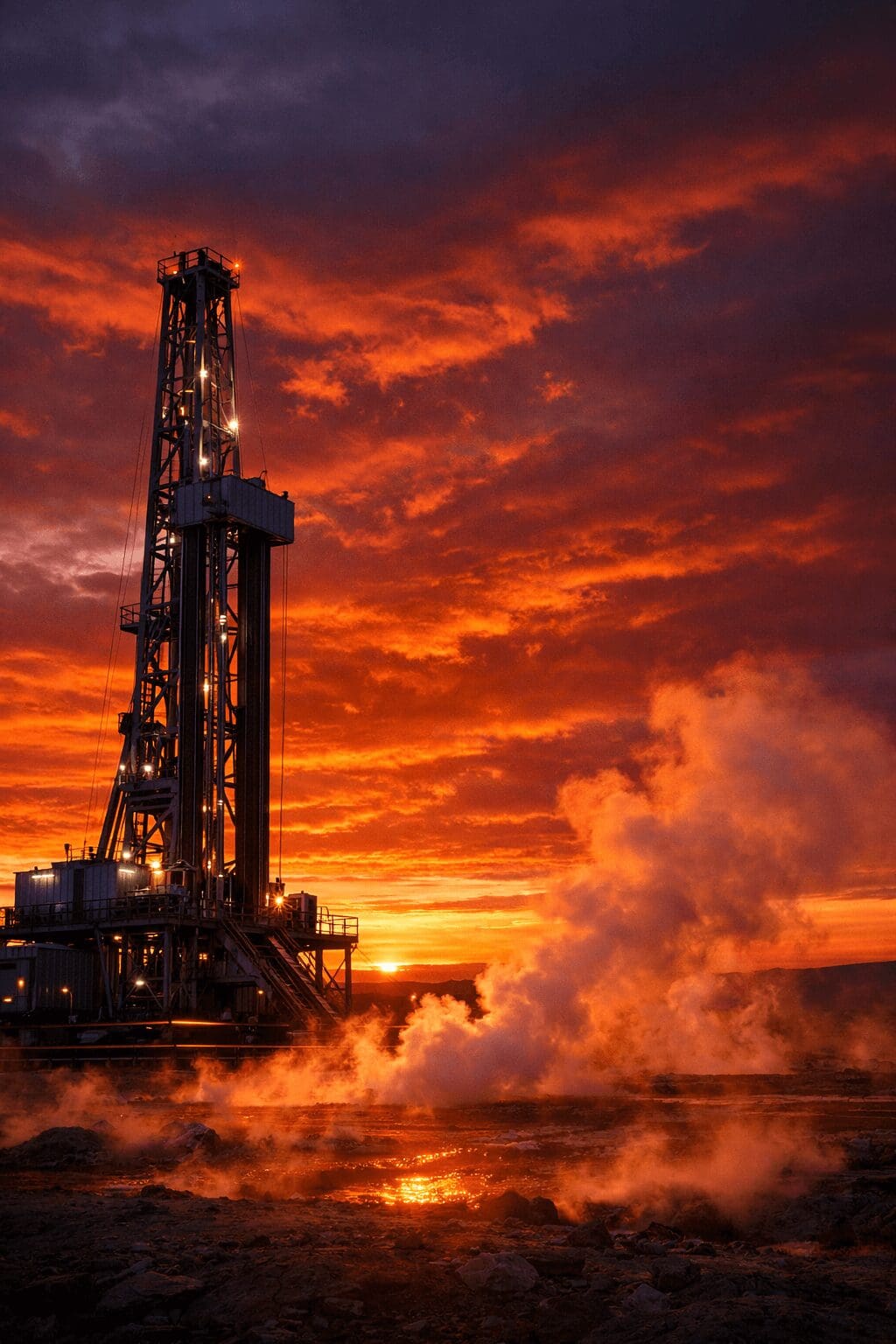
      Modern geothermal drilling rig silhouetted against a glowing orange sunset, representing deep‑earth heat and next‑generation clean energy.

      Based in Calgary, Alberta and Proudly Canadian • Don’t Get Burned When You Get Solar • Based in Calgary, Alberta and Proudly Canadian • Don’t Get Burned When You Get Solar • Based in Calgary, Alberta and Proudly Canadian • Don’t Get Burned When You Get Solar • Based in Calgary, Alberta and Proudly Canadian • Don’t Get Burned When You Get Solar • Based in Calgary, Alberta and Proudly Canadian • Don’t Get Burned When You Get Solar • Based in Calgary, Alberta and Proudly Canadian • Don’t Get Burned When You Get Solar • Based in Calgary, Alberta and Proudly Canadian • Don’t Get Burned When You Get Solar • Based in Calgary, Alberta and Proudly Canadian • Don’t Get Burned When You Get Solar • Based in Calgary, Alberta and Proudly Canadian • Don’t Get Burned When You Get Solar • Based in Calgary, Alberta and Proudly Canadian • Don’t Get Burned When You Get Solar • Based in Calgary, Alberta and Proudly Canadian • Don’t Get Burned When You Get Solar • Based in Calgary, Alberta and Proudly Canadian • Don’t Get Burned When You Get Solar •    

      Based in Calgary, Alberta and Proudly Canadian • Don’t Get Burned When You Get Solar • Based in Calgary, Alberta and Proudly Canadian • Don’t Get Burned When You Get Solar • Based in Calgary, Alberta and Proudly Canadian • Don’t Get Burned When You Get Solar • Based in Calgary, Alberta and Proudly Canadian • Don’t Get Burned When You Get Solar • Based in Calgary, Alberta and Proudly Canadian • Don’t Get Burned When You Get Solar • Based in Calgary, Alberta and Proudly Canadian • Don’t Get Burned When You Get Solar • Based in Calgary, Alberta and Proudly Canadian • Don’t Get Burned When You Get Solar • Based in Calgary, Alberta and Proudly Canadian • Don’t Get Burned When You Get Solar • Based in Calgary, Alberta and Proudly Canadian • Don’t Get Burned When You Get Solar • Based in Calgary, Alberta and Proudly Canadian • Don’t Get Burned When You Get Solar • Based in Calgary, Alberta and Proudly Canadian • Don’t Get Burned When You Get Solar • Based in Calgary, Alberta and Proudly Canadian • Don’t Get Burned When You Get Solar •    

      Based in Calgary, Alberta and Proudly Canadian • Don’t Get Burned When You Get Solar • Based in Calgary, Alberta and Proudly Canadian • Don’t Get Burned When You Get Solar • Based in Calgary, Alberta and Proudly Canadian • Don’t Get Burned When You Get Solar • Based in Calgary, Alberta and Proudly Canadian • Don’t Get Burned When You Get Solar • Based in Calgary, Alberta and Proudly Canadian • Don’t Get Burned When You Get Solar • Based in Calgary, Alberta and Proudly Canadian • Don’t Get Burned When You Get Solar • Based in Calgary, Alberta and Proudly Canadian • Don’t Get Burned When You Get Solar • Based in Calgary, Alberta and Proudly Canadian • Don’t Get Burned When You Get Solar • Based in Calgary, Alberta and Proudly Canadian • Don’t Get Burned When You Get Solar • Based in Calgary, Alberta and Proudly Canadian • Don’t Get Burned When You Get Solar • Based in Calgary, Alberta and Proudly Canadian • Don’t Get Burned When You Get Solar • Based in Calgary, Alberta and Proudly Canadian • Don’t Get Burned When You Get Solar •    

      Based in Calgary, Alberta and Proudly Canadian • Don’t Get Burned When You Get Solar • Based in Calgary, Alberta and Proudly Canadian • Don’t Get Burned When You Get Solar • Based in Calgary, Alberta and Proudly Canadian • Don’t Get Burned When You Get Solar • Based in Calgary, Alberta and Proudly Canadian • Don’t Get Burned When You Get Solar • Based in Calgary, Alberta and Proudly Canadian • Don’t Get Burned When You Get Solar • Based in Calgary, Alberta and Proudly Canadian • Don’t Get Burned When You Get Solar • Based in Calgary, Alberta and Proudly Canadian • Don’t Get Burned When You Get Solar • Based in Calgary, Alberta and Proudly Canadian • Don’t Get Burned When You Get Solar • Based in Calgary, Alberta and Proudly Canadian • Don’t Get Burned When You Get Solar • Based in Calgary, Alberta and Proudly Canadian • Don’t Get Burned When You Get Solar • Based in Calgary, Alberta and Proudly Canadian • Don’t Get Burned When You Get Solar • Based in Calgary, Alberta and Proudly Canadian • Don’t Get Burned When You Get Solar •    

      Based in Calgary, Alberta and Proudly Canadian • Don’t Get Burned When You Get Solar • Based in Calgary, Alberta and Proudly Canadian • Don’t Get Burned When You Get Solar • Based in Calgary, Alberta and Proudly Canadian • Don’t Get Burned When You Get Solar • Based in Calgary, Alberta and Proudly Canadian • Don’t Get Burned When You Get Solar • Based in Calgary, Alberta and Proudly Canadian • Don’t Get Burned When You Get Solar • Based in Calgary, Alberta and Proudly Canadian • Don’t Get Burned When You Get Solar • Based in Calgary, Alberta and Proudly Canadian • Don’t Get Burned When You Get Solar • Based in Calgary, Alberta and Proudly Canadian • Don’t Get Burned When You Get Solar • Based in Calgary, Alberta and Proudly Canadian • Don’t Get Burned When You Get Solar • Based in Calgary, Alberta and Proudly Canadian • Don’t Get Burned When You Get Solar • Based in Calgary, Alberta and Proudly Canadian • Don’t Get Burned When You Get Solar • Based in Calgary, Alberta and Proudly Canadian • Don’t Get Burned When You Get Solar •    

      Based in Calgary, Alberta and Proudly Canadian • Don’t Get Burned When You Get Solar • Based in Calgary, Alberta and Proudly Canadian • Don’t Get Burned When You Get Solar • Based in Calgary, Alberta and Proudly Canadian • Don’t Get Burned When You Get Solar • Based in Calgary, Alberta and Proudly Canadian • Don’t Get Burned When You Get Solar • Based in Calgary, Alberta and Proudly Canadian • Don’t Get Burned When You Get Solar • Based in Calgary, Alberta and Proudly Canadian • Don’t Get Burned When You Get Solar • Based in Calgary, Alberta and Proudly Canadian • Don’t Get Burned When You Get Solar • Based in Calgary, Alberta and Proudly Canadian • Don’t Get Burned When You Get Solar • Based in Calgary, Alberta and Proudly Canadian • Don’t Get Burned When You Get Solar • Based in Calgary, Alberta and Proudly Canadian • Don’t Get Burned When You Get Solar • Based in Calgary, Alberta and Proudly Canadian • Don’t Get Burned When You Get Solar • Based in Calgary, Alberta and Proudly Canadian • Don’t Get Burned When You Get Solar •    

      Based in Calgary, Alberta and Proudly Canadian • Don’t Get Burned When You Get Solar • Based in Calgary, Alberta and Proudly Canadian • Don’t Get Burned When You Get Solar • Based in Calgary, Alberta and Proudly Canadian • Don’t Get Burned When You Get Solar • Based in Calgary, Alberta and Proudly Canadian • Don’t Get Burned When You Get Solar • Based in Calgary, Alberta and Proudly Canadian • Don’t Get Burned When You Get Solar • Based in Calgary, Alberta and Proudly Canadian • Don’t Get Burned When You Get Solar • Based in Calgary, Alberta and Proudly Canadian • Don’t Get Burned When You Get Solar • Based in Calgary, Alberta and Proudly Canadian • Don’t Get Burned When You Get Solar • Based in Calgary, Alberta and Proudly Canadian • Don’t Get Burned When You Get Solar • Based in Calgary, Alberta and Proudly Canadian • Don’t Get Burned When You Get Solar • Based in Calgary, Alberta and Proudly Canadian • Don’t Get Burned When You Get Solar • Based in Calgary, Alberta and Proudly Canadian • Don’t Get Burned When You Get Solar •    

      Based in Calgary, Alberta and Proudly Canadian • Don’t Get Burned When You Get Solar • Based in Calgary, Alberta and Proudly Canadian • Don’t Get Burned When You Get Solar • Based in Calgary, Alberta and Proudly Canadian • Don’t Get Burned When You Get Solar • Based in Calgary, Alberta and Proudly Canadian • Don’t Get Burned When You Get Solar • Based in Calgary, Alberta and Proudly Canadian • Don’t Get Burned When You Get Solar • Based in Calgary, Alberta and Proudly Canadian • Don’t Get Burned When You Get Solar • Based in Calgary, Alberta and Proudly Canadian • Don’t Get Burned When You Get Solar • Based in Calgary, Alberta and Proudly Canadian • Don’t Get Burned When You Get Solar • Based in Calgary, Alberta and Proudly Canadian • Don’t Get Burned When You Get Solar • Based in Calgary, Alberta and Proudly Canadian • Don’t Get Burned When You Get Solar • Based in Calgary, Alberta and Proudly Canadian • Don’t Get Burned When You Get Solar • Based in Calgary, Alberta and Proudly Canadian • Don’t Get Burned When You Get Solar •    

      Based in Calgary, Alberta and Proudly Canadian • Don’t Get Burned When You Get Solar • Based in Calgary, Alberta and Proudly Canadian • Don’t Get Burned When You Get Solar • Based in Calgary, Alberta and Proudly Canadian • Don’t Get Burned When You Get Solar • Based in Calgary, Alberta and Proudly Canadian • Don’t Get Burned When You Get Solar • Based in Calgary, Alberta and Proudly Canadian • Don’t Get Burned When You Get Solar • Based in Calgary, Alberta and Proudly Canadian • Don’t Get Burned When You Get Solar • Based in Calgary, Alberta and Proudly Canadian • Don’t Get Burned When You Get Solar • Based in Calgary, Alberta and Proudly Canadian • Don’t Get Burned When You Get Solar • Based in Calgary, Alberta and Proudly Canadian • Don’t Get Burned When You Get Solar • Based in Calgary, Alberta and Proudly Canadian • Don’t Get Burned When You Get Solar • Based in Calgary, Alberta and Proudly Canadian • Don’t Get Burned When You Get Solar • Based in Calgary, Alberta and Proudly Canadian • Don’t Get Burned When You Get Solar •    

      Based in Calgary, Alberta and Proudly Canadian • Don’t Get Burned When You Get Solar • Based in Calgary, Alberta and Proudly Canadian • Don’t Get Burned When You Get Solar • Based in Calgary, Alberta and Proudly Canadian • Don’t Get Burned When You Get Solar • Based in Calgary, Alberta and Proudly Canadian • Don’t Get Burned When You Get Solar • Based in Calgary, Alberta and Proudly Canadian • Don’t Get Burned When You Get Solar • Based in Calgary, Alberta and Proudly Canadian • Don’t Get Burned When You Get Solar • Based in Calgary, Alberta and Proudly Canadian • Don’t Get Burned When You Get Solar • Based in Calgary, Alberta and Proudly Canadian • Don’t Get Burned When You Get Solar • Based in Calgary, Alberta and Proudly Canadian • Don’t Get Burned When You Get Solar • Based in Calgary, Alberta and Proudly Canadian • Don’t Get Burned When You Get Solar • Based in Calgary, Alberta and Proudly Canadian • Don’t Get Burned When You Get Solar • Based in Calgary, Alberta and Proudly Canadian • Don’t Get Burned When You Get Solar •    

      Feel secure when you switch to
      solar.

      When You Work with greenkey

      you get:

      A no-pressure analysis of your home's solar potential.

      A free strategy session to help you decide if GreenKey is right for you.

      A dedicated, knowledgeable Project Consultant with industry experience.

      A robust current and future energy needs assessment.

      Quotes from our network of trusted, licensed contractors.

      An expert analysis of your quotes, using GreenKey's proprietary modeling tool.

      A full side-by-side comparison chart with normalized data.

      An expert recommendation based on your longterm needs and goals.

      A live session with your Project Consultant to discuss financing options.

      An information session to help you understand how Solar Club works.

      Based in Calgary, Alberta and Proudly Canadian • Don’t Get Burned When You Get Solar • Based in Calgary, Alberta and Proudly Canadian • Don’t Get Burned When You Get Solar • Based in Calgary, Alberta and Proudly Canadian • Don’t Get Burned When You Get Solar • Based in Calgary, Alberta and Proudly Canadian • Don’t Get Burned When You Get Solar • Based in Calgary, Alberta and Proudly Canadian • Don’t Get Burned When You Get Solar • Based in Calgary, Alberta and Proudly Canadian • Don’t Get Burned When You Get Solar • Based in Calgary, Alberta and Proudly Canadian • Don’t Get Burned When You Get Solar • Based in Calgary, Alberta and Proudly Canadian • Don’t Get Burned When You Get Solar • Based in Calgary, Alberta and Proudly Canadian • Don’t Get Burned When You Get Solar • Based in Calgary, Alberta and Proudly Canadian • Don’t Get Burned When You Get Solar • Based in Calgary, Alberta and Proudly Canadian • Don’t Get Burned When You Get Solar • Based in Calgary, Alberta and Proudly Canadian • Don’t Get Burned When You Get Solar •    

      Based in Calgary, Alberta and Proudly Canadian • Don’t Get Burned When You Get Solar • Based in Calgary, Alberta and Proudly Canadian • Don’t Get Burned When You Get Solar • Based in Calgary, Alberta and Proudly Canadian • Don’t Get Burned When You Get Solar • Based in Calgary, Alberta and Proudly Canadian • Don’t Get Burned When You Get Solar • Based in Calgary, Alberta and Proudly Canadian • Don’t Get Burned When You Get Solar • Based in Calgary, Alberta and Proudly Canadian • Don’t Get Burned When You Get Solar • Based in Calgary, Alberta and Proudly Canadian • Don’t Get Burned When You Get Solar • Based in Calgary, Alberta and Proudly Canadian • Don’t Get Burned When You Get Solar • Based in Calgary, Alberta and Proudly Canadian • Don’t Get Burned When You Get Solar • Based in Calgary, Alberta and Proudly Canadian • Don’t Get Burned When You Get Solar • Based in Calgary, Alberta and Proudly Canadian • Don’t Get Burned When You Get Solar • Based in Calgary, Alberta and Proudly Canadian • Don’t Get Burned When You Get Solar •    

      Based in Calgary, Alberta and Proudly Canadian • Don’t Get Burned When You Get Solar • Based in Calgary, Alberta and Proudly Canadian • Don’t Get Burned When You Get Solar • Based in Calgary, Alberta and Proudly Canadian • Don’t Get Burned When You Get Solar • Based in Calgary, Alberta and Proudly Canadian • Don’t Get Burned When You Get Solar • Based in Calgary, Alberta and Proudly Canadian • Don’t Get Burned When You Get Solar • Based in Calgary, Alberta and Proudly Canadian • Don’t Get Burned When You Get Solar • Based in Calgary, Alberta and Proudly Canadian • Don’t Get Burned When You Get Solar • Based in Calgary, Alberta and Proudly Canadian • Don’t Get Burned When You Get Solar • Based in Calgary, Alberta and Proudly Canadian • Don’t Get Burned When You Get Solar • Based in Calgary, Alberta and Proudly Canadian • Don’t Get Burned When You Get Solar • Based in Calgary, Alberta and Proudly Canadian • Don’t Get Burned When You Get Solar • Based in Calgary, Alberta and Proudly Canadian • Don’t Get Burned When You Get Solar •    

      Based in Calgary, Alberta and Proudly Canadian • Don’t Get Burned When You Get Solar • Based in Calgary, Alberta and Proudly Canadian • Don’t Get Burned When You Get Solar • Based in Calgary, Alberta and Proudly Canadian • Don’t Get Burned When You Get Solar • Based in Calgary, Alberta and Proudly Canadian • Don’t Get Burned When You Get Solar • Based in Calgary, Alberta and Proudly Canadian • Don’t Get Burned When You Get Solar • Based in Calgary, Alberta and Proudly Canadian • Don’t Get Burned When You Get Solar • Based in Calgary, Alberta and Proudly Canadian • Don’t Get Burned When You Get Solar • Based in Calgary, Alberta and Proudly Canadian • Don’t Get Burned When You Get Solar • Based in Calgary, Alberta and Proudly Canadian • Don’t Get Burned When You Get Solar • Based in Calgary, Alberta and Proudly Canadian • Don’t Get Burned When You Get Solar • Based in Calgary, Alberta and Proudly Canadian • Don’t Get Burned When You Get Solar • Based in Calgary, Alberta and Proudly Canadian • Don’t Get Burned When You Get Solar •    

      Based in Calgary, Alberta and Proudly Canadian • Don’t Get Burned When You Get Solar • Based in Calgary, Alberta and Proudly Canadian • Don’t Get Burned When You Get Solar • Based in Calgary, Alberta and Proudly Canadian • Don’t Get Burned When You Get Solar • Based in Calgary, Alberta and Proudly Canadian • Don’t Get Burned When You Get Solar • Based in Calgary, Alberta and Proudly Canadian • Don’t Get Burned When You Get Solar • Based in Calgary, Alberta and Proudly Canadian • Don’t Get Burned When You Get Solar • Based in Calgary, Alberta and Proudly Canadian • Don’t Get Burned When You Get Solar • Based in Calgary, Alberta and Proudly Canadian • Don’t Get Burned When You Get Solar • Based in Calgary, Alberta and Proudly Canadian • Don’t Get Burned When You Get Solar • Based in Calgary, Alberta and Proudly Canadian • Don’t Get Burned When You Get Solar • Based in Calgary, Alberta and Proudly Canadian • Don’t Get Burned When You Get Solar • Based in Calgary, Alberta and Proudly Canadian • Don’t Get Burned When You Get Solar •    

      Based in Calgary, Alberta and Proudly Canadian • Don’t Get Burned When You Get Solar • Based in Calgary, Alberta and Proudly Canadian • Don’t Get Burned When You Get Solar • Based in Calgary, Alberta and Proudly Canadian • Don’t Get Burned When You Get Solar • Based in Calgary, Alberta and Proudly Canadian • Don’t Get Burned When You Get Solar • Based in Calgary, Alberta and Proudly Canadian • Don’t Get Burned When You Get Solar • Based in Calgary, Alberta and Proudly Canadian • Don’t Get Burned When You Get Solar • Based in Calgary, Alberta and Proudly Canadian • Don’t Get Burned When You Get Solar • Based in Calgary, Alberta and Proudly Canadian • Don’t Get Burned When You Get Solar • Based in Calgary, Alberta and Proudly Canadian • Don’t Get Burned When You Get Solar • Based in Calgary, Alberta and Proudly Canadian • Don’t Get Burned When You Get Solar • Based in Calgary, Alberta and Proudly Canadian • Don’t Get Burned When You Get Solar • Based in Calgary, Alberta and Proudly Canadian • Don’t Get Burned When You Get Solar •    

      Based in Calgary, Alberta and Proudly Canadian • Don’t Get Burned When You Get Solar • Based in Calgary, Alberta and Proudly Canadian • Don’t Get Burned When You Get Solar • Based in Calgary, Alberta and Proudly Canadian • Don’t Get Burned When You Get Solar • Based in Calgary, Alberta and Proudly Canadian • Don’t Get Burned When You Get Solar • Based in Calgary, Alberta and Proudly Canadian • Don’t Get Burned When You Get Solar • Based in Calgary, Alberta and Proudly Canadian • Don’t Get Burned When You Get Solar • Based in Calgary, Alberta and Proudly Canadian • Don’t Get Burned When You Get Solar • Based in Calgary, Alberta and Proudly Canadian • Don’t Get Burned When You Get Solar • Based in Calgary, Alberta and Proudly Canadian • Don’t Get Burned When You Get Solar • Based in Calgary, Alberta and Proudly Canadian • Don’t Get Burned When You Get Solar • Based in Calgary, Alberta and Proudly Canadian • Don’t Get Burned When You Get Solar • Based in Calgary, Alberta and Proudly Canadian • Don’t Get Burned When You Get Solar •    

      Based in Calgary, Alberta and Proudly Canadian • Don’t Get Burned When You Get Solar • Based in Calgary, Alberta and Proudly Canadian • Don’t Get Burned When You Get Solar • Based in Calgary, Alberta and Proudly Canadian • Don’t Get Burned When You Get Solar • Based in Calgary, Alberta and Proudly Canadian • Don’t Get Burned When You Get Solar • Based in Calgary, Alberta and Proudly Canadian • Don’t Get Burned When You Get Solar • Based in Calgary, Alberta and Proudly Canadian • Don’t Get Burned When You Get Solar • Based in Calgary, Alberta and Proudly Canadian • Don’t Get Burned When You Get Solar • Based in Calgary, Alberta and Proudly Canadian • Don’t Get Burned When You Get Solar • Based in Calgary, Alberta and Proudly Canadian • Don’t Get Burned When You Get Solar • Based in Calgary, Alberta and Proudly Canadian • Don’t Get Burned When You Get Solar • Based in Calgary, Alberta and Proudly Canadian • Don’t Get Burned When You Get Solar • Based in Calgary, Alberta and Proudly Canadian • Don’t Get Burned When You Get Solar •    

      Based in Calgary, Alberta and Proudly Canadian • Don’t Get Burned When You Get Solar • Based in Calgary, Alberta and Proudly Canadian • Don’t Get Burned When You Get Solar • Based in Calgary, Alberta and Proudly Canadian • Don’t Get Burned When You Get Solar • Based in Calgary, Alberta and Proudly Canadian • Don’t Get Burned When You Get Solar • Based in Calgary, Alberta and Proudly Canadian • Don’t Get Burned When You Get Solar • Based in Calgary, Alberta and Proudly Canadian • Don’t Get Burned When You Get Solar • Based in Calgary, Alberta and Proudly Canadian • Don’t Get Burned When You Get Solar • Based in Calgary, Alberta and Proudly Canadian • Don’t Get Burned When You Get Solar • Based in Calgary, Alberta and Proudly Canadian • Don’t Get Burned When You Get Solar • Based in Calgary, Alberta and Proudly Canadian • Don’t Get Burned When You Get Solar • Based in Calgary, Alberta and Proudly Canadian • Don’t Get Burned When You Get Solar • Based in Calgary, Alberta and Proudly Canadian • Don’t Get Burned When You Get Solar •    

      Based in Calgary, Alberta and Proudly Canadian • Don’t Get Burned When You Get Solar • Based in Calgary, Alberta and Proudly Canadian • Don’t Get Burned When You Get Solar • Based in Calgary, Alberta and Proudly Canadian • Don’t Get Burned When You Get Solar • Based in Calgary, Alberta and Proudly Canadian • Don’t Get Burned When You Get Solar • Based in Calgary, Alberta and Proudly Canadian • Don’t Get Burned When You Get Solar • Based in Calgary, Alberta and Proudly Canadian • Don’t Get Burned When You Get Solar • Based in Calgary, Alberta and Proudly Canadian • Don’t Get Burned When You Get Solar • Based in Calgary, Alberta and Proudly Canadian • Don’t Get Burned When You Get Solar • Based in Calgary, Alberta and Proudly Canadian • Don’t Get Burned When You Get Solar • Based in Calgary, Alberta and Proudly Canadian • Don’t Get Burned When You Get Solar • Based in Calgary, Alberta and Proudly Canadian • Don’t Get Burned When You Get Solar • Based in Calgary, Alberta and Proudly Canadian • Don’t Get Burned When You Get Solar •    

      introducing Our ceo & co-founder

      Luke Killam

      Our CEO, Luke Killam, is a respected senior energy professional with over 20 years of global experience in operations, strategy, and renewable development. Drawing on his industry expertise and analytical mindset, Luke and his team help homeowners, real estate developers, businesses, communities, and governments save money and create a secure energy future. With a background in business statistics and a global executive MBA from TRIUM (NYU Stern, London School of Economics, and HEC Paris), Luke is committed to helping Canadians own their energy and grow their green.

      spend money
      on life

      not electricity

      here at greenkey, we have one simple goal:

      help canadian families spend less money on electricity.

      yep, that's right; we get that there's a lot to worry about in the world, but...

      We're here because we want
      your family to have the money you need
      to live your best lives.

      We're here because we want your family
      to have the
      money you need to
      live your best lives.

      and we just have one question for you:

      do you think electricity
      prices are                 going to:

      do you think electricity prices are


       going to:

      so we just have one question for you:

      Go down

      most likely

      Electricity prices are going to go down.

      Unlikely

      While it’s great to hope for lower costs, national energy demands are rising, and infrastructure upgrades are needed to support increasing populations. Temporary dips may happen, but significant, long-term reductions are unlikely without substantial changes in technology or government policy to drive down production costs.


      Electricity prices are going to stay about the same.

      Unlikely

      Electricity prices might seem stable in the short term, but underlying factors—like inflation, infrastructure maintenance, and new technology—make it unlikely that they'll remain unchanged for long. Even if prices hold steady for a while, long-term projections suggest gradual increases to the price of electricity due to rising populations and demand.

      Electricity prices are going to go up.

      Most likely

      Electricity prices are expected to rise due to inflation and the costs associated with increasing populations and demand. Infrastructure upgrades, carbon pricing, and geopolitical factors are also likely to contribute to higher costs. Securing energy independence for your family could help buffer you from rising electricity costs in the future.

      X go back

      Here's how we're different

      We don't accept kickbacks.

      We give you full access to your data.

      We provide ongoing support.

      learn about our approach

      plan for your future.book your free strategy session today.

      Own your energy. grow your green.